

The Death Cliff in Ha Giang: Ultimate Travel Guide
Perched high in Ha Giang, Death Cliff offers breathtaking views of mountains and valleys, making it a must-visit spot for adventurous travelers. Whether you’re seeking thrilling landscapes or perfect photo opportunities, this guide will help you explore safely and make the most of your visit. MOTOGO Tours is here to introduce this unforgettable destination to you.
Introduction to Ha Giang’s Death Cliff
Ha Giang’s Death Cliff is one of the most breathtaking spots in northern Vietnam, offering panoramic mountain views and unforgettable scenery. Whether you’re an adventure seeker or a photography enthusiast, this guide will help you explore safely and enjoy every moment.
What Exactly is the Death Cliff?
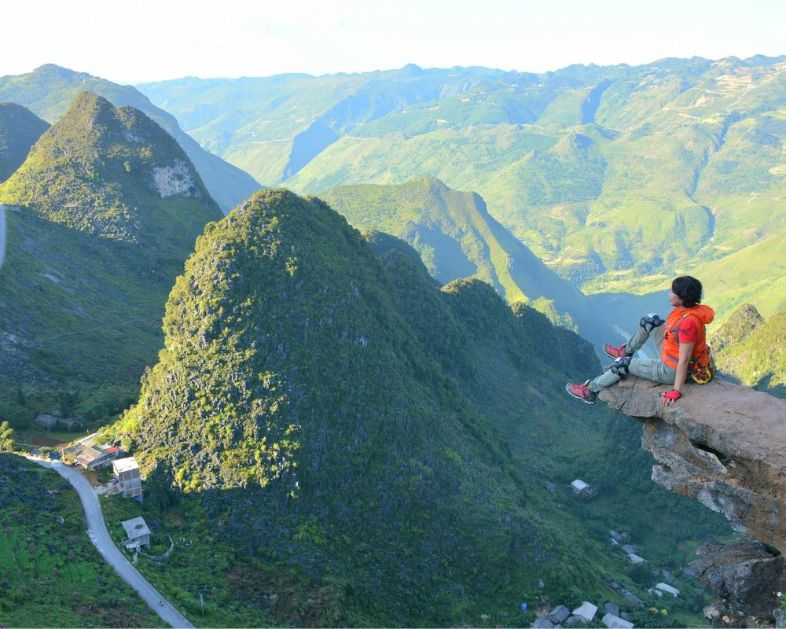
There is a certain “ghostly allure” to Death Cliff in Ha Giang. The place captivates the soul while unnerving the mind, as you stand on a jagged limestone outcrop suspended 1,200 meters above the world.
The air feels thinner, the silence heavier, and the view so vast it seems almost prehistoric. It’s a delicate balance between raw natural beauty and potential danger—a spot that rewards the bold but warns the reckless.
Where is Death Cliff Located?
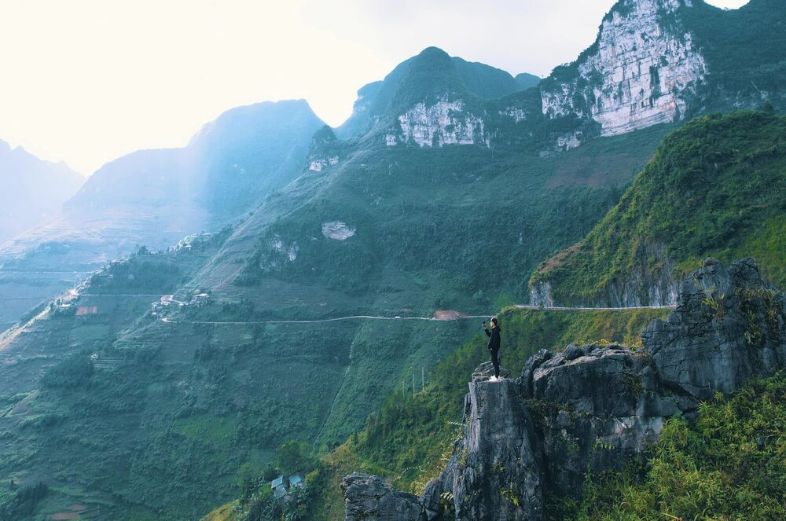
The cliff is located in Pai Lung Commune, Meo Vac District. Strategically perched at the highest point of the legendary Ma Pi Leng Pass, Death Cliff in Ha Giang occupies a realm of its own. This part of the pass is famous for its narrow, winding roads, sharp turns, and steep climbs.
Unlike modern highways, the route has no guardrails, requiring travelers to stay alert at all times. Just 25 kilometers from the main town, it marks a dramatic highlight for any northern Vietnam expedition.
How to get there
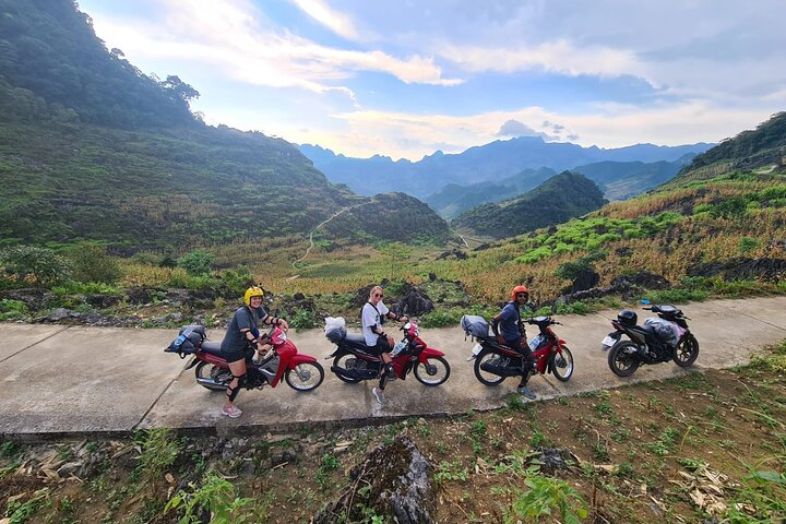
Getting to Death Cliff is half the adventure. Whether by motorbike, car, or guided tour, travelers must navigate the winding “Happiness Road,” a path loved by hikers and riders who embrace a little vertical challenge.
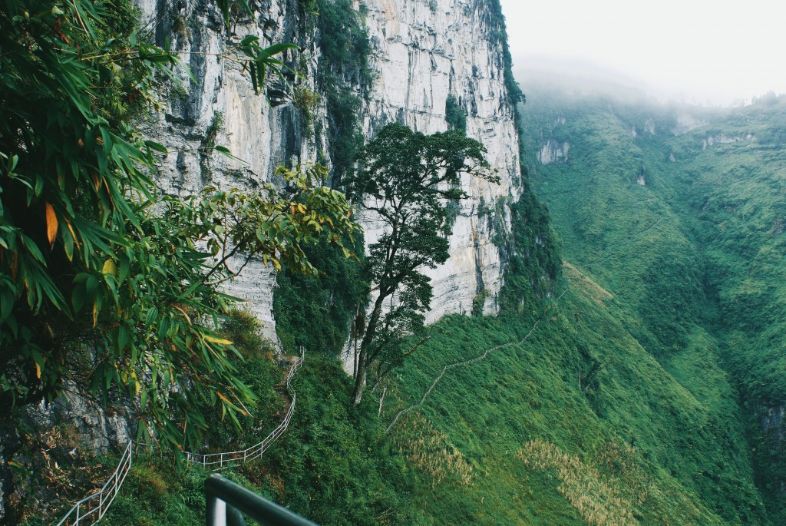
Many choose Ha Giang motorbike tours to fully enjoy the scenic ride. As you climb, the landscape transforms from gentle hills to rugged peaks that shift colors with the seasons, building anticipation with every hairpin turn.
Best Time to Visit: Chasing the Perfect View
Timing is everything when visiting Death Cliff. You don’t want to make the journey only to be swallowed by a thick fog. October to November is the ideal period: cool weather, blooming buckwheat fields, and usually clear skies. March to May also offers beautiful scenery, with lush green hills and flowering peach trees.
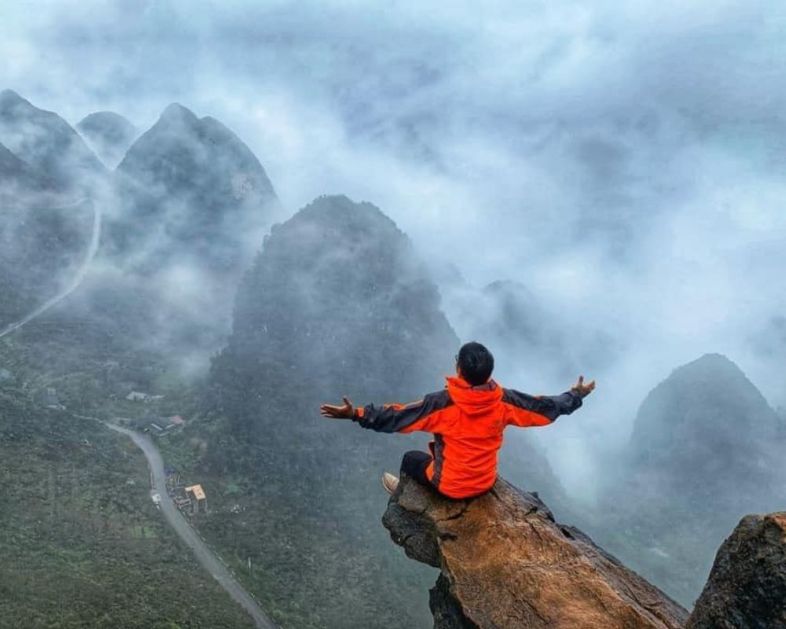
Avoid the rainy season from June to August, as slippery limestone and potential landslides make the roads dangerous.
>>> Ha Giang Jeep Tour: Scenic Routes & Tips
Death Cliff Ha Giang: Adventure, Views, and Thrills
Perched high above the Nho Que River, Death Cliff in Ha Giang is a raw and thrilling destination for adventure seekers. From narrow, winding paths to breathtaking views of Southeast Asia’s deepest canyon, this hidden gem promises an unforgettable mix of awe, adrenaline, and photo-worthy moments.
Not Officially Recognized, But Famous Among Adventure Travelers
Interestingly, Death Cliff in Ha Giang isn’t officially recognized as a tourist site. There are no ticket booths, souvenir shops, or safety fences. Despite this, its fame has spread rapidly through social media, with Instagram posts, travel vlogs, and personal blogs turning this unofficial landmark into a global sensation.
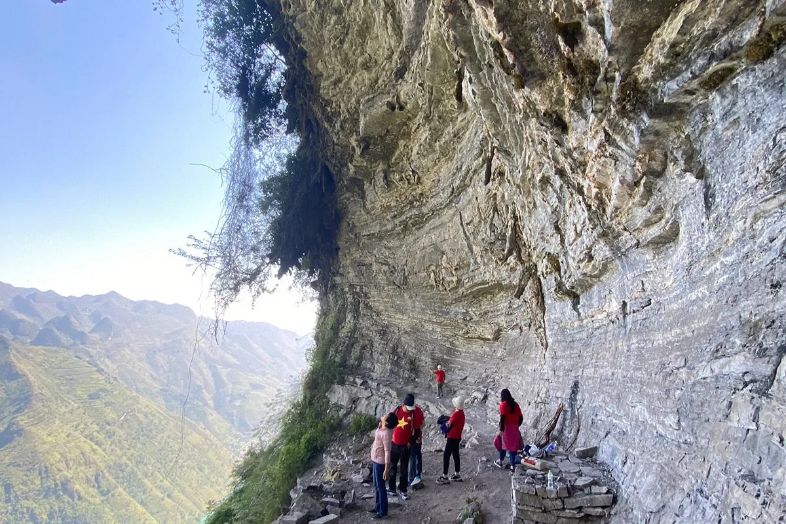
Unlike commercialized scenic spots, the cliff offers a raw, high-adrenaline experience with challenging accessibility. For those seeking an authentic adventure, the absence of government promotion only adds to its mystique, making it a must-visit destination for true explorers on the Ha Giang Loop.
The Thrill of Standing on the Edge: Between Sky and Abyss
Standing at the edge of Death Cliff in Ha Giang is a truly visceral experience. Visitors often feel a mix of adrenaline and awe, a literal “rush” that courses through the body.
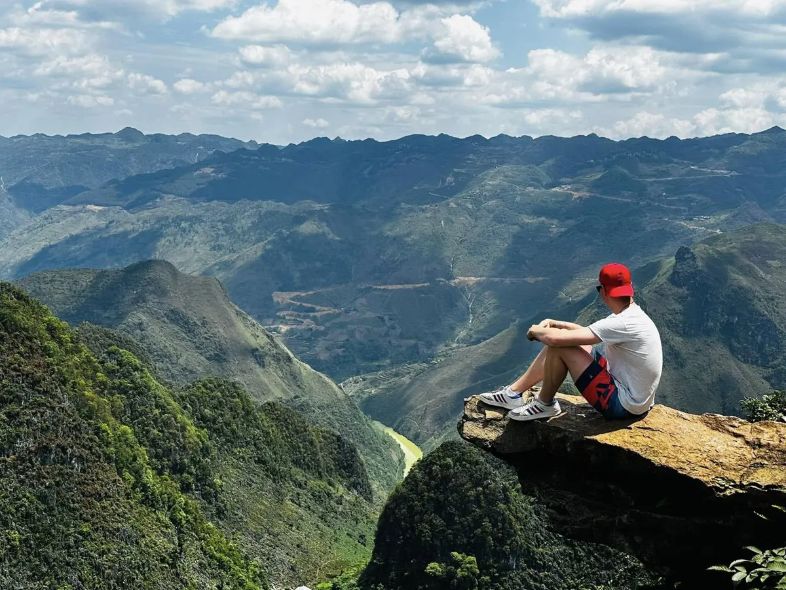
Leaning out over the edge, you aren’t just taking in a view—you’re gazing into the Tu San Abyss, Southeast Asia’s deepest canyon. Stretching roughly 1,700 meters long and plunging more than 1,000 meters deep, the ground below feels incredibly fragile, heightening the thrill of every step.
Narrow, Steep Path: A Challenge Only for the Brave
The route to Death Cliff is reserved for the truly adventurous. Steep and narrow, the path demands full concentration, with some stretches barely wide enough for two vehicles and unguarded drops on one side.
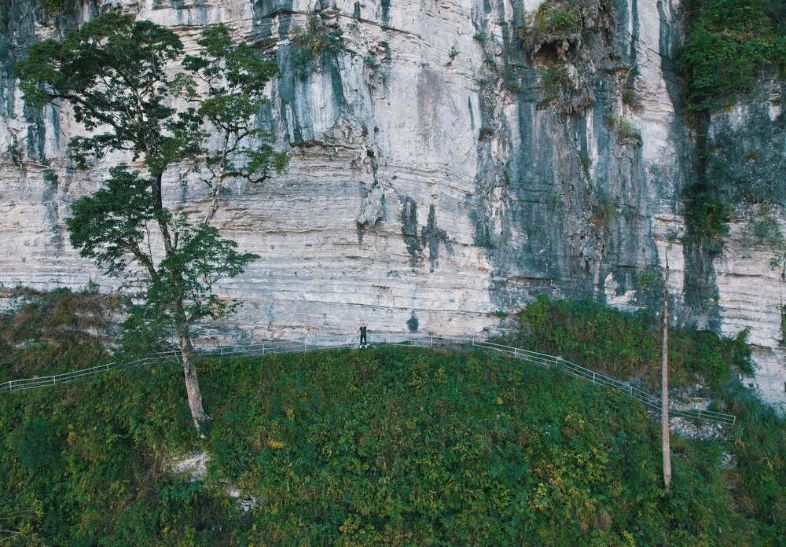
For motorbike riders and trekkers, navigating this terrain is as much a mental challenge as a physical one. Every step and turn requires focus, making the journey a rite of passage for thrill-seekers who want to be fully present in the moment.
Overlooking the Tu San Alley: Breathtaking and Nerve-Wracking
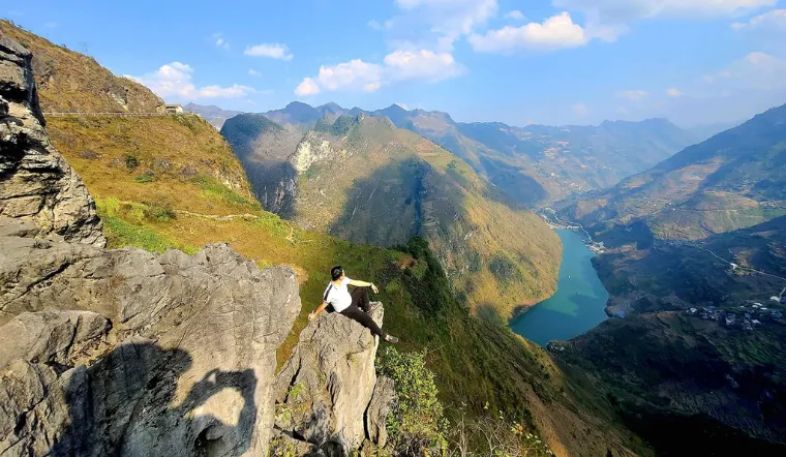
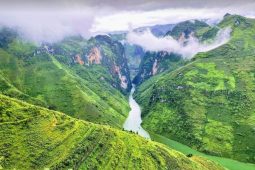
From the edge of Death Cliff, the Nho Que River winds below like a delicate emerald-green ribbon. The contrast between the lush river valley and the rugged grey karst cliffs creates a view that is nothing short of cinematic.
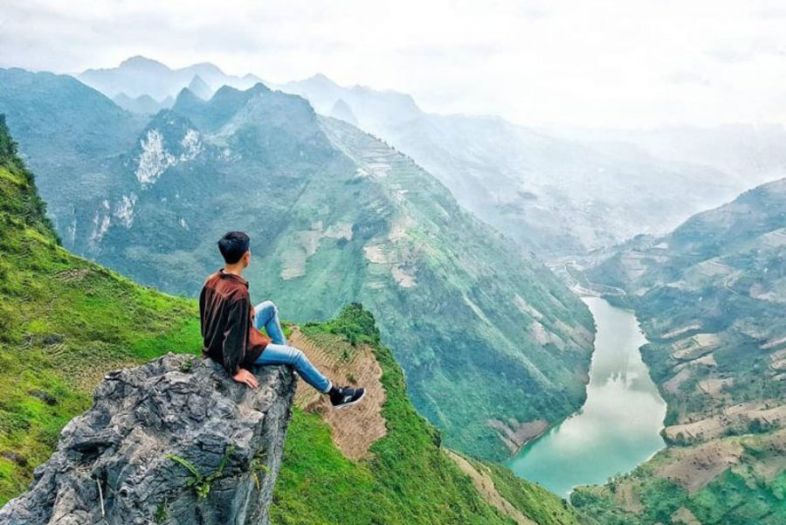
Yet this breathtaking beauty comes with an element of fear. The alley’s staggering depth makes every step near the edge a test of nerve. Many visitors later take a boat trip on the river, looking up at the cliffs they once stood upon, gaining a full appreciation of the scale and grandeur of this natural wonder.
>>> Ha Giang Loop’s Best Passes and Roads: A Complete Guide to Vietnam’s Top Motorbike Routes
Iconic Photo Spot: Capturing Cinematic Grandeur
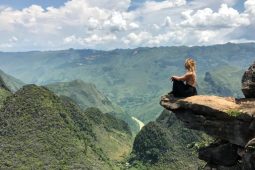
Death Cliff in Ha Giang is one of Northern Vietnam’s most iconic photography spots. Visitors can capture themselves seemingly suspended between sky, cliff, and abyss, creating dramatic, unforgettable images.
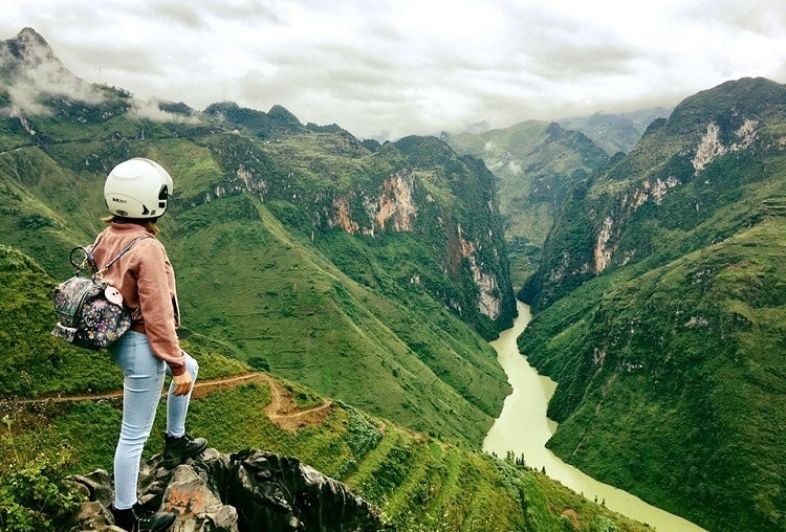
For the best results, photographers often aim for sunrise or sunset, when golden and crimson light bathes the limestone cliffs and drifting clouds. These “Golden Hours” transform the landscape into a scene straight out of a painting—but safety should always come first.
Tips for Visiting Death Cliff Ha Giang
Safety is not an option; it is a requirement here. The most hazardous feature is the complete lack of safety barriers.
- Monitoring Weather and Surface Conditions: Sudden rain or fog can turn the limestone into a surface as slippery as ice. It is vital to monitor the weather and avoid the cliff during or immediately after heavy rainfall. Fog can also roll in within minutes, obscuring the edge and making navigation impossible.
- Always Go with Companions – Avoid Solo Visits: Exploring the Death Cliff Ha Giang should be a shared adventure. Venturing alone significantly heightens the risks. Having companions ensures that immediate assistance is available and provides a second pair of eyes to discourage risky behavior.
- Photography Guide: To capture the “floating” effect, have your photographer step back and use a wide-angle lens to include the Nho Que River below. The best light is during the late afternoon Golden Hour, when the canyon glows softly.
- Gear and Preparation: You don’t need full mountaineering gear, but a small daypack is essential—bring water to stay hydrated on the steep, high-altitude hike, a light jacket for chilly winds, a power bank for photos and GPS, and some small cash for parking fees (around 10,000–20,000 VND).
Nearby Attractions: Completing Your Ha Giang Loop
Don’t just stand on the edge and leave! The area surrounding the Death Cliff Ha Giang is packed with geological wonders and cultural deep-dives that turn a simple “photo stop” into a multi-day odyssey. Here is how you can round out your itinerary:
Nho Que River Boat Trip & Tu San Alley
After gazing down from 1,000 meters, it’s time to experience the view from below. Follow the steep, winding road down to Ta Lang Wharf, where you can board a motorboat or rent a kayak to explore the emerald Nho Que River.
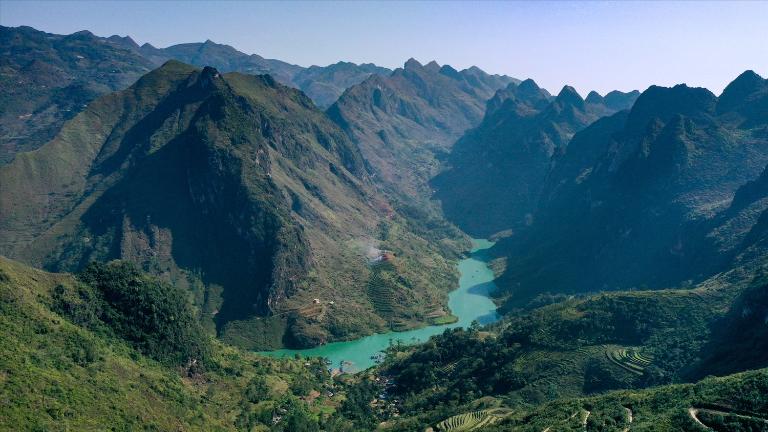
As you navigate the waters, you pass directly through the Tu San Alley, Southeast Asia’s deepest canyon. Looking up at the vertical limestone walls soaring 800 meters above is a humbling experience that truly showcases the scale of the Dong Van Karst Plateau.
Lung Cu Flag Tower
Drive north for about two hours to reach Vietnam’s symbolic “peak.” Perched atop Dragon Mountain, the Lung Cu Flag Tower marks the country’s northernmost point.
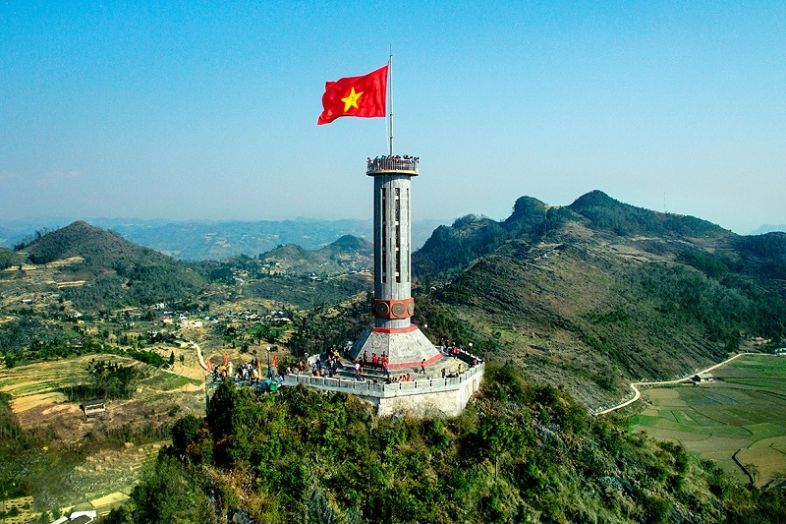
After climbing 839 stone steps, you are rewarded with a 360-degree panorama overlooking the rolling hills of China. The massive 54-square-meter flag symbolizes the unity of Vietnam’s 54 ethnic groups.
Lo Lo Chai Village
Located at the foot of Lung Cu Flag Tower, Lo Lo Chai village is one of Northern Vietnam’s most beautiful ethnic communities. It is home to the Lo Lo people and is known for its traditional earthen houses with yin-yang tiled roofs.
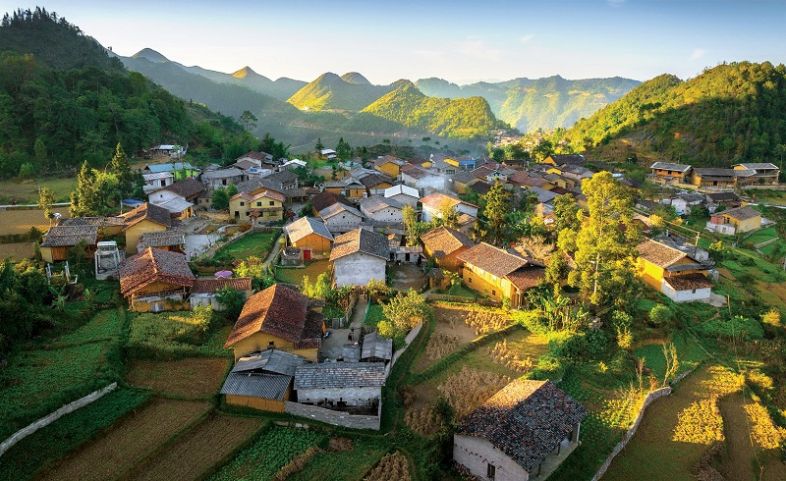
Visitors can enjoy a peaceful overnight stay, sip traditional tea, and explore the intricate, colorful costumes worn by local women, immersing themselves in the rich cultural heritage of the village.
>>> Hidden Gems in Ha Giang: Discover the Untouched Beauty of Vietnam’s Northern Frontier
Dong Van Old Quarter
This town is the heart of highland social life, with Chinese-influenced architecture dating back over a century.
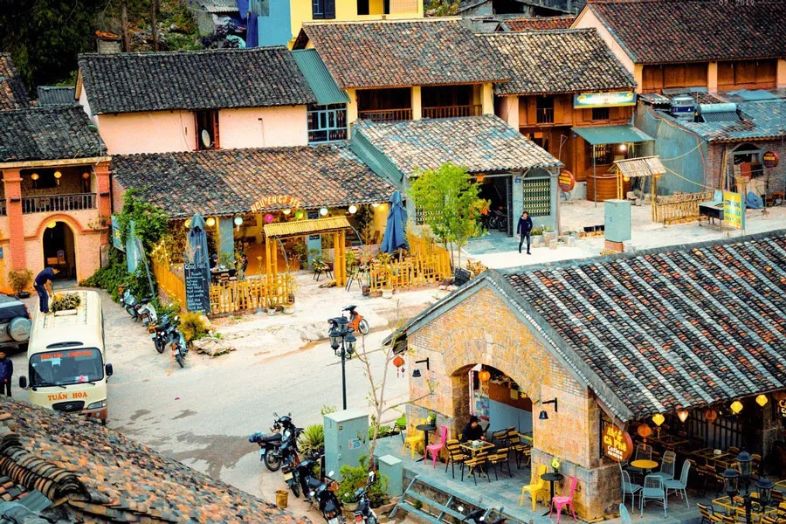
On Sunday mornings, the Dong Van Market bursts with color as ethnic groups from across the region gather to trade. After an adrenaline-filled visit to Death Cliff, warm up with a bowl of Thang Co, a traditional Hmong horse meat stew, or Chao Au Tau, a bitter root porridge.
Tham Ma Pass
Often the first “test” for riders, this iconic S-shaped mountain pass is also where Hmong children sell baskets of flowers to travelers.
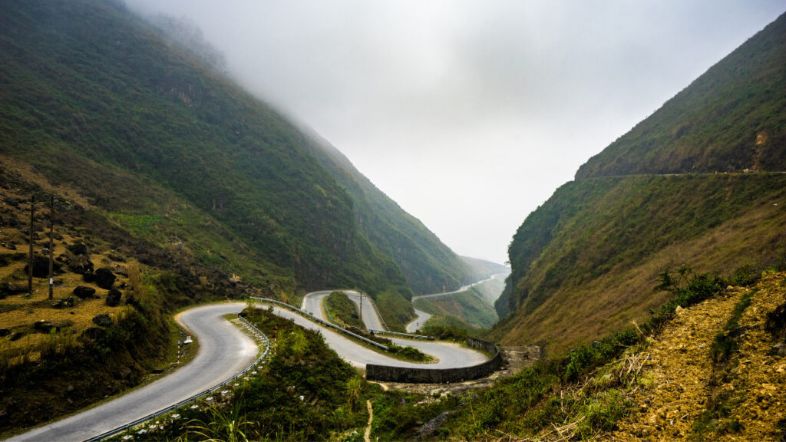
Historically, Tham Ma Pass was used to test the strength of horses: those that reached the top without exhaustion were kept, while weaker ones were used for food—a grim but intriguing piece of local history.
Should you visit Death Cliff in Ha Giang? Absolutely—if you respect nature and crave adventure. Standing there with the wind in your hair and Vietnam’s vastness below, you’ll realize it’s not about danger, but truly living. Take only photos, leave only footprints, and never underestimate the mountain.
Related Posts:
- Ha Giang in August: Best Time to Explore Vietnam’s Hidden Gem
- Ha Giang in September: Unforgettable Landscapes and Culture
- Explore Top Things to Do in Ha Giang in November
- Top Things to Do in Ha Giang in December: Nature, Culture, and Winter Magic



Be the first to comment!