

Explore the Majestic Khai Dinh Tomb in Hue
Tucked away in the poetic city of Hue, Khai Dinh Tomb is a masterpiece of architecture and culture that tells the story of Vietnam’s imperial legacy. This iconic landmark showcases the blend of Eastern and Western design, offering visitors a glimpse into the sophisticated world of Emperor Khai Dinh. Let MOTOGO Tours dive into the history, architecture, and cultural importance of this stunning tomb.
Historical Significance of Khai Dinh Tomb
The Legacy of Emperor Khai Dinh
The Nguyen Dynasty’s 12th emperor, Khai Dinh, was born Nguyen Phuc Buu Dao and became emperor in 1916. During his reign, there was a lot of political unrest and a lot of French colonial power. Khai Dinh is often remembered as a controversial leader, but he was also a man with a vision for the future. He wanted to leave behind a legacy that showed the spirit and contradictions of his time.
Khai Dinh wanted a resting place that would honor his imperial ancestors and also reflect his own beliefs. He wanted it to be a close mix of Vietnam’s rich cultural history and the pulse of modern Europe. Khai Dinh Tomb is a great work of art that stands out. It represents a delicate conversation between tradition and change, the past and an awakening future.
The Construction Timeline
The building of Khai Dinh Tomb started in 1920 and went on for 11 years. It was finished in 1931 by Emperor Bao Dai, Khai Dinh’s successor. This mausoleum took a lot of time, effort, and dedication to build because of the very high level of detail and the rare materials used. This is different from other Nguyen emperors’ tombs, which were often built quickly while they were still alive.
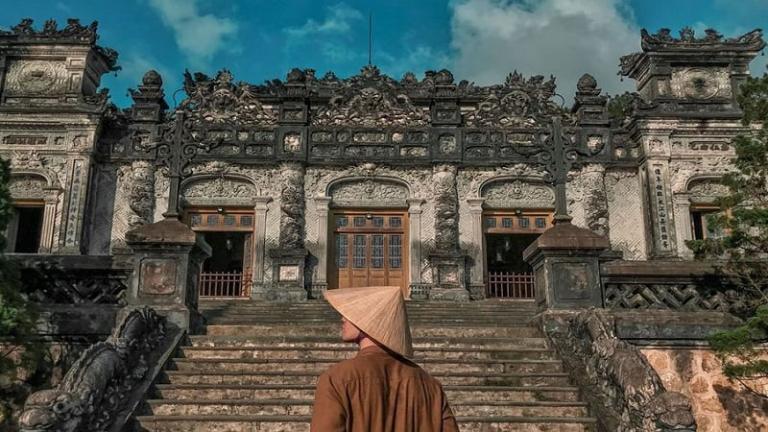
The tomb was built with a lot of imported materials, like French iron, Italian marble, and Chinese ceramics. It was designed by Nguyen Van Khanh, a trusted mandarin of the court. Khai Dinh made these choices because he was interested in how things from other cultures affected him and wanted to go beyond what was expected. Vietnamese artisans and craftsmen worked hard, using traditional methods to make foreign materials come to life in the intricate mosaics and ornate details that still amaze visitors today.
Khai Dinh’s Connection to Modernization
Khai Dinh’s time on the throne was a quiet but important turning point in Vietnam’s journey through colonialism and modernization. His choice to include Western design elements in his tomb was not just an architectural choice; it was a sign of the changing world. Some historians see this choice as a break from tradition, while others see it as a brave and personal response to changes in culture.
Today, Khai Dinh Tomb is a strong reflection of the emperor’s complicated soul. He was a ruler who was torn between honoring traditional values and wanting to embrace modern expression. The tomb is still an important historical site that lets visitors feel the emotional impact of Vietnam’s imperial past and how it changed slowly under colonial rule.
Key Attractions Inside Khai Dinh Tomb
The Tam Quan Gate
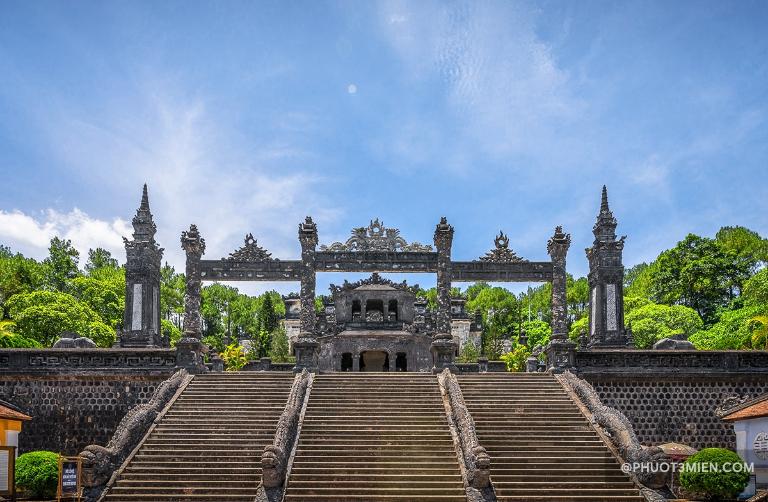
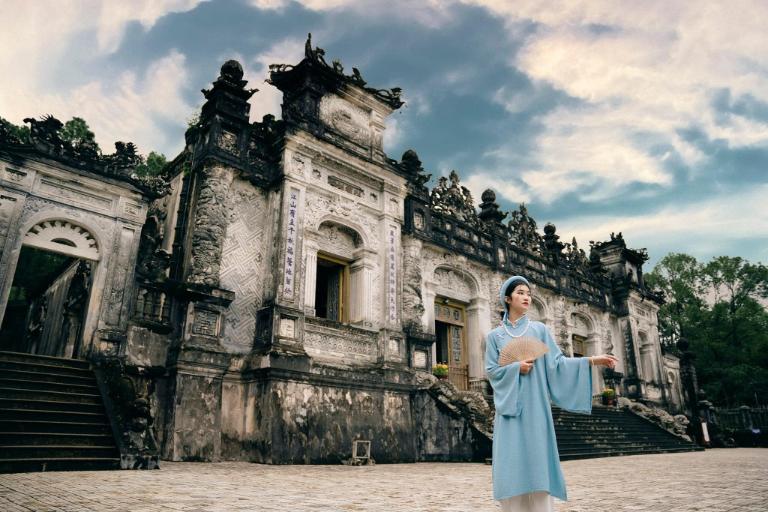
The Tam Quan Gate is one of the main things to see inside Khai Dinh Tomb. The Tam Quan Gate is the grand and serious entrance to Khai Dinh Tomb. It is the first step into one of Vietnam’s most moving imperial mausoleums. As you get closer, the gate’s strong and graceful design immediately catches your eye. Visitors climb 37 stone steps to get to the other side. Each step makes them more excited about the beauty that lies ahead.
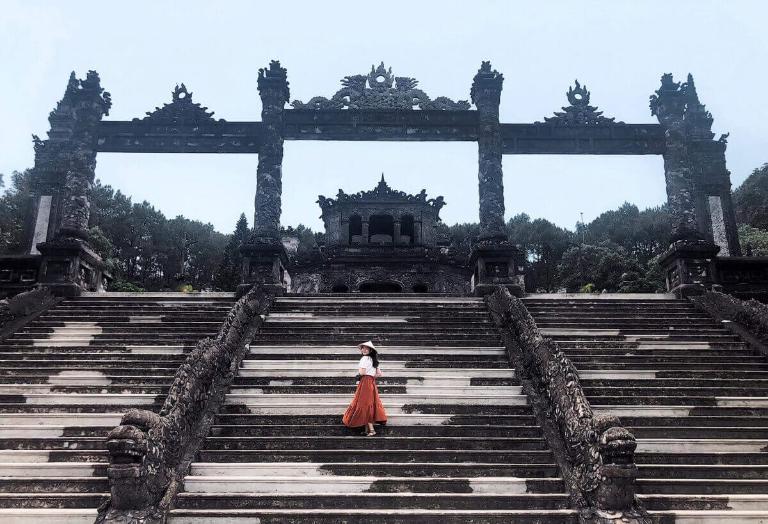
The Tam Quan Gate is unforgettable because it combines Vietnamese and Indian architectural styles in a way that is very rare. The pillars, which are carved in a unique Hindu style, are both surprising and beautiful. This harmonious mix shows Khai Dinh’s bigger vision: it shows Vietnam’s spiritual ties to India through Buddhism and the many ways that French colonialism has affected the country.
The Nghi Mon and Bai Dinh Courtyard
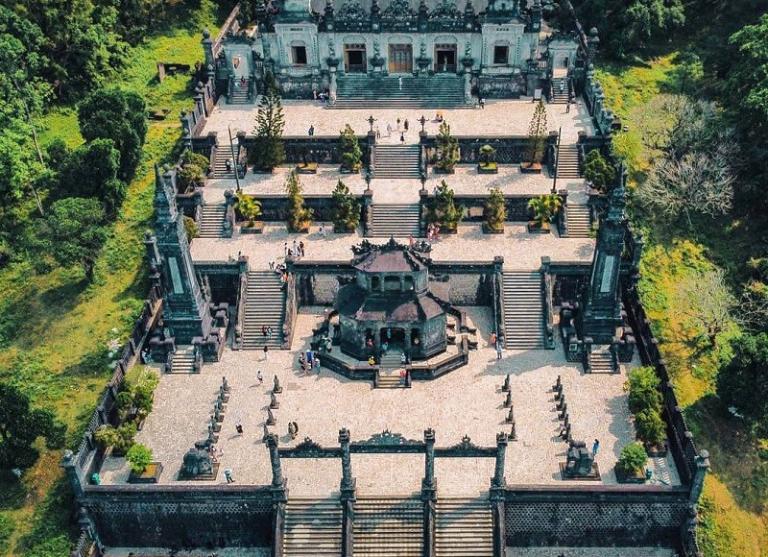
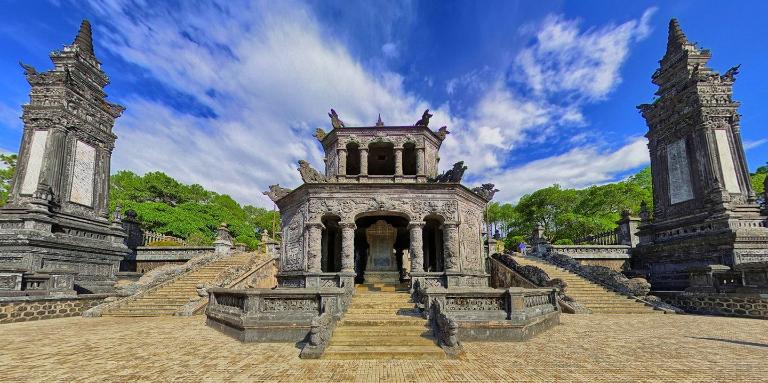
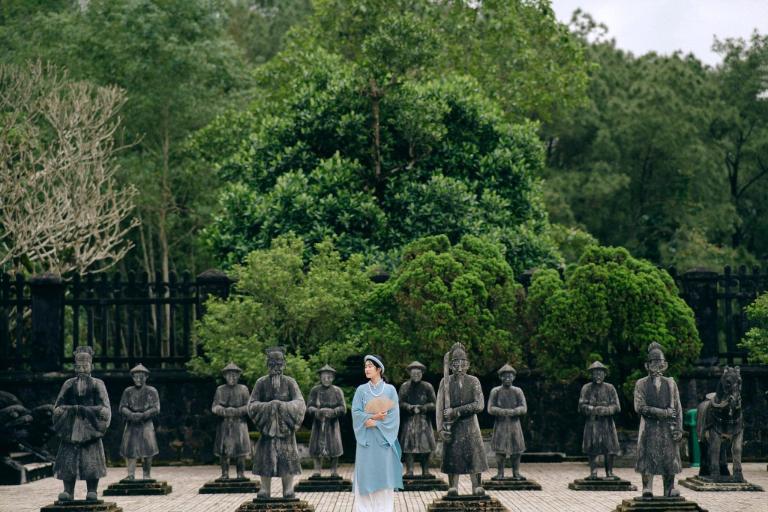
From the Tam Quan Gate, the path goes up another 29 steps to the Nghi Mon and Bai Dinh Courtyard. This space opens up like a breath held in awe, giving you a wide view of the careful work and ceremonial symmetry. There are rows of statues in the courtyard that are of courtiers, soldiers, and mythical creatures. They are all standing still and giving the courtyard a sense of calm and respect.
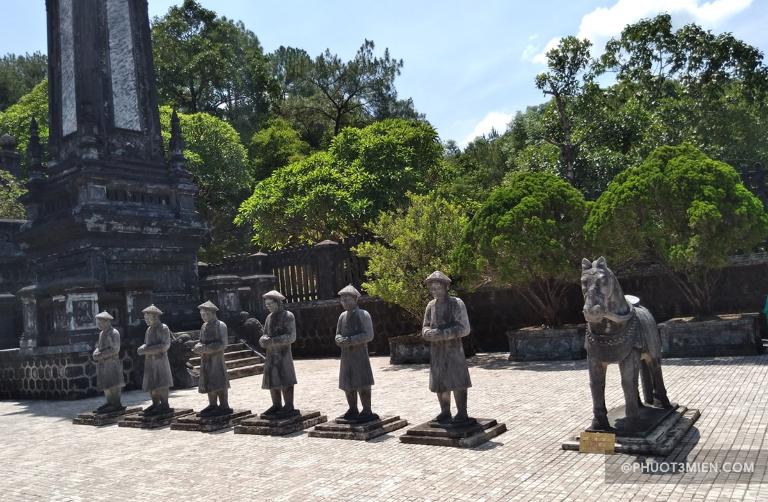
These figures are not just for show. Every statue is a work of art with a soul, made by skilled hands and a lot of love. Their serious faces and finely carved details make them feel almost alive, and they will always protect the emperor’s legacy. Dragons coil with restrained power, and warriors look ahead with unshakeable loyalty. Each shape tells a story of power, faith, and beauty that never goes out of style.
Exploring the Cung Thiên Định at Khai Dinh Tomb
Visitors who go deeper into the mausoleum will eventually reach the Cung Thiên Định, which is on the fifth and highest level of Khai Dinh Tomb. This holy place is where Emperor Khai Dinh will be buried. The climb through the third and fourth floors feels like a ceremony, as if each step brings you closer to the emperor’s vision.
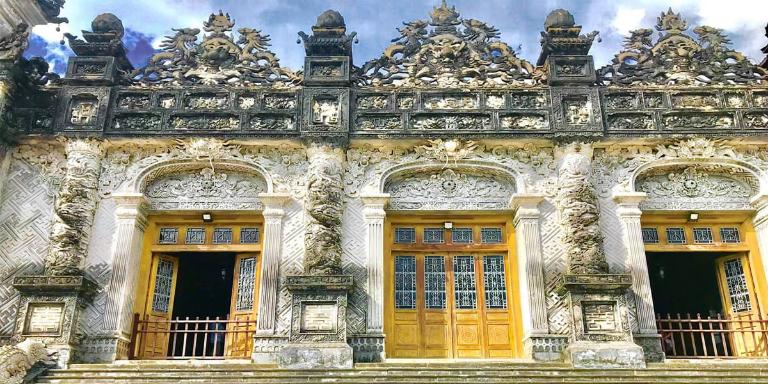
The Cung Thiên Định is more than just a place to bury someone; it is the tomb’s emotional and artistic heart. This room is full of beautiful mosaics, detailed carvings, and bright details that show how much Khai Dinh loved European, Asian, and Vietnamese art. This is a place where modern ambition and ancient tradition come together to make a space that feels personal, grand, and deeply human. It is the last expression of an emperor who sought beauty even in eternity.
Experience the Unique Architecture of Điện Khải Thành in the Tomb
Điện Khải Thành, the sacred main hall where Emperor Khai Dinh is forever enshrined, is at the very heart of the Cung Thiên Định. This hall is more than just a place to rest; it is a deep expression of artistry, devotion, and pride in the empire. The emperor’s body lies in silence beneath the main altar, and above it, a life-sized bronze statue of Khai Dinh rises with quiet authority, a lasting sign of his presence and legacy.
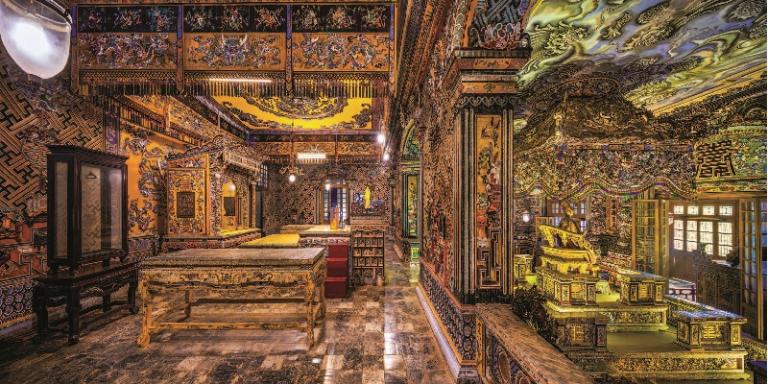
The way Điện Khải Thành is built is truly amazing. Every detail shows how traditional Vietnamese design and Western art come together to make a space that feels both timeless and very modern. The magnificent one-ton Bửu Tán, a reinforced concrete structure built to protect the emperor’s remains with strength and respect, stands in the middle of the hall.
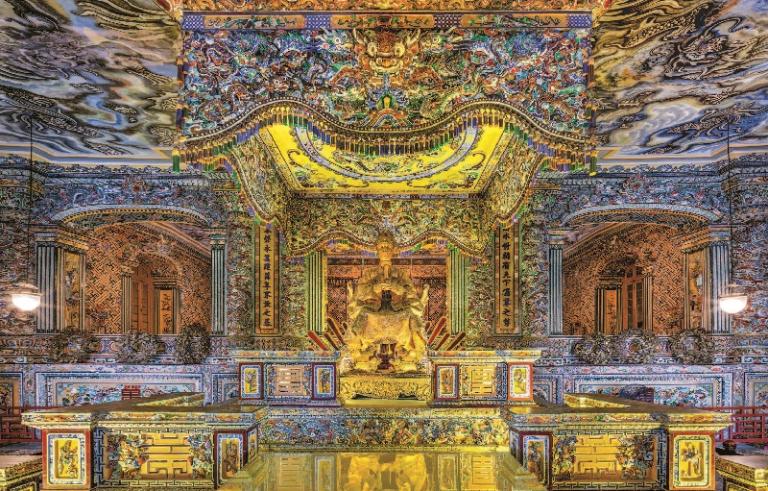
Even though it is very heavy, the Bửu Tán looks light and almost ethereal. This is a perfect example of the delicate balance between power and grace that defines Khai Dinh Tomb. The way the hall is put together shows how much the emperor cared about Vietnam’s imperial history and how much he liked the artistic spirit of a world that was changing.
Admire the Bronze Statue of Emperor Khai Dinh
The bronze statues of Emperor Khai Dinh are one of the most unusual things about Khai Dinh Tomb. They are very rare in royal mausoleums. Inside the tomb, visitors can see two life-sized statues of the emperor. Each one was carefully carved to look like him and show his power. These statues are the emotional and visual center of the mausoleum. They give off a sense of quiet strength and solemn dignity.
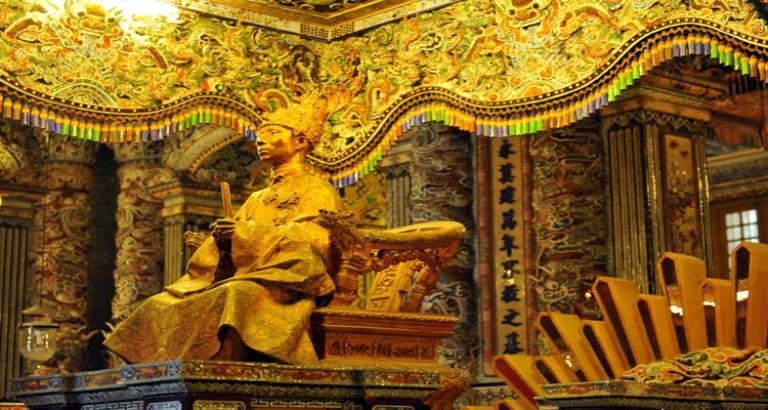
The first statue, which sits on a grand throne inside Điện Khải Thành, represents imperial power and majesty. It was sculpted by two French artists and cast in 1920. Later, skilled artisans from Hue refined it by carefully gilding it with gold leaf. The result is a stunning combination of European style and Vietnamese meaning—an artwork that feels both powerful and sophisticated.
The second statue, which is inside the Cung Thiên Định, shows the emperor in a more active pose that suggests strength, determination, and inner tension. A craftsman from Quảng Nam made the statue, which was originally in Cung An Định. In 1975, it was moved to Cung Thiên Định, where it gained even more history and meaning.
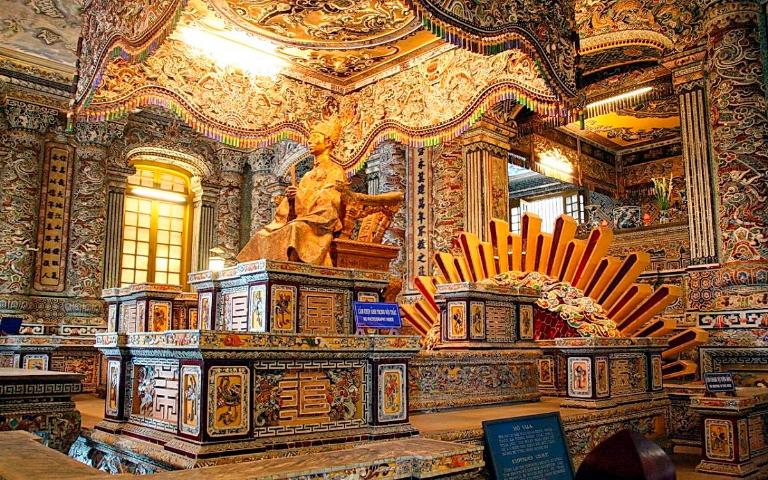
These statues are more than just artistic representations; they also tell us about the time when Khai Dinh was in charge. His brave choice to make a lifelike bronze statue of himself was a statement of who he was and what he wanted to do. He wanted to be remembered not just as an emperor, but also as a man who was able to walk the fine line between old traditions and new changes.
Essential Information for Visiting Khai Dinh Tomb
Visiting Khai Dinh Tomb is both beautiful and moving. A little planning can go a long way toward making sure you have a comfortable and meaningful experience that lets you fully appreciate its architectural beauty and cultural depth.
The Location and Surrounding Area
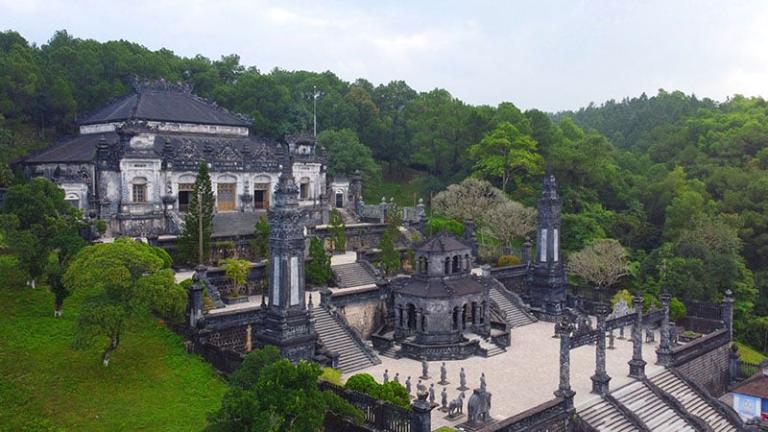
Khai Dinh Tomb is about 10 kilometers southwest of the old city center of Hue. It is located on the peaceful slopes of Châu Chữ Mountain. The tomb is on top of a hill, so you have to climb steadily to get there. But the effort is worth it because you get amazing views and a deep sense of peace, where imperial grandeur meets the quiet beauty of nature.
Best Time to Visit
Picking the right time can make your trip to Khai Dinh Tomb much better.
- Weather: The best time to visit Hue, especially Khai Dinh Tomb, is during the dry season, which runs from February to April. The weather is mild and nice during these months, with temperatures between 18°C and 25°C (64°F and 77°F). This makes it easy for visitors to explore without being too hot or humid.
- Avoiding the Crowds: Khai Dinh Tomb is one of Hue’s most popular sights, so it can get busy. Going early in the morning or late in the afternoon is a better time to visit. The tomb opens at 7:00 AM. If you get there early, you’ll have a quieter place to be, softer light, and a closer connection to the site.
How to Get to Khai Dinh Tomb
It’s easy and convenient to get to Khai Dinh Tomb. It takes about 20 minutes to get there by motorbike, taxi, or car from the center of Hue. The roads are in good shape and easy to get to. Renting a motorbike is a popular and fun way for travelers to feel free and enjoy the local culture.
A lot of local tour companies offer half-day or full-day trips that include Khai Dinh Tomb and other nearby sites like Minh Mang Tomb or the Imperial City. If you want a more relaxed and comfortable ride, there are also public buses and taxis that are easy to find.
Exploring Hue’s Other Tombs and Landmarks
Khai Dinh Tomb is definitely one of the best things to see, but there are many other imperial and cultural treasures in Hue that you can explore.
Minh Mang Tomb
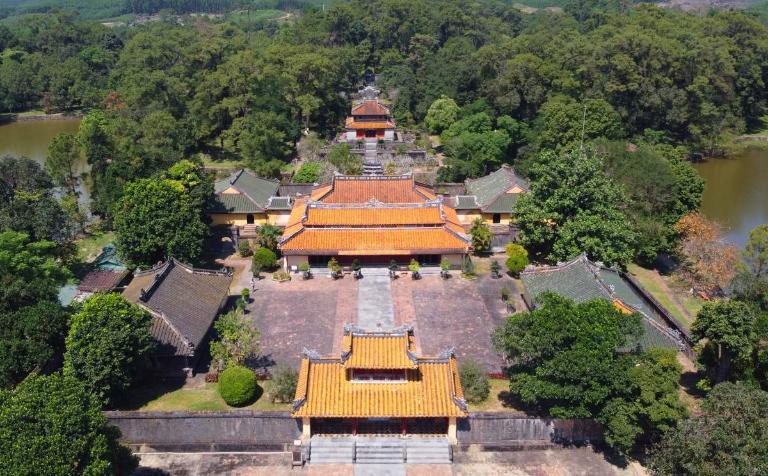
Minh Mang Tomb is a great example of classical imperial design and is close to Khai Dinh Tomb. The way it is set up shows Emperor Minh Mang’s deep philosophical and spiritual beliefs, which makes for a more traditional and peaceful setting. It is a peaceful change from the ornate complexity of Khai Dinh Tomb because it is surrounded by thick forests and ponds that reflect the sky.
Imperial City (Citadel)
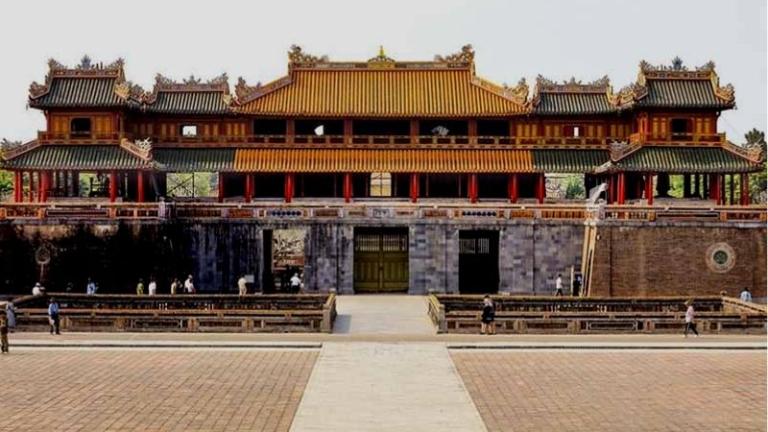
The Imperial City is a UNESCO World Heritage Site and was once the political and ceremonial center of the Nguyen Dynasty. It is located in the center of Hue. The huge complex is surrounded by strong walls and moats. Inside, there are palaces, temples, and gardens that remind us of Vietnam’s royal past.
Thien Mu Pagoda
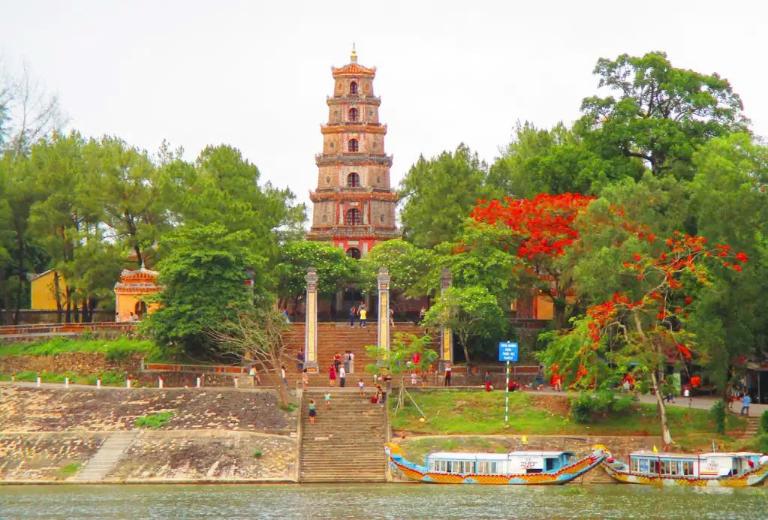
Thien Mu Pagoda, one of Hue’s oldest and most famous Buddhist sites, is just a short drive away. The seven-tiered pagoda looks out over the slow-moving Perfume River. It is a peaceful place to think and connect with your spiritual side, and it is a beautiful contrast to the royal tombs.
Tu Duc Tomb
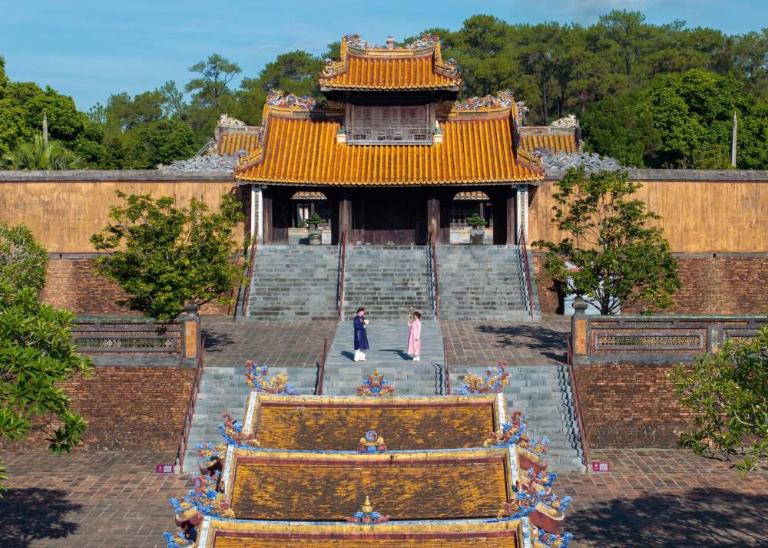
Tu Duc Tomb, which is farther away, draws visitors in with its large gardens, calm lakes, and poetic setting. The site was meant to be a retreat for the emperor while he was alive. It feels cozy and peaceful, and it offers a softer, more reflective experience than other royal mausoleums in Hue.
Dong Ba Market
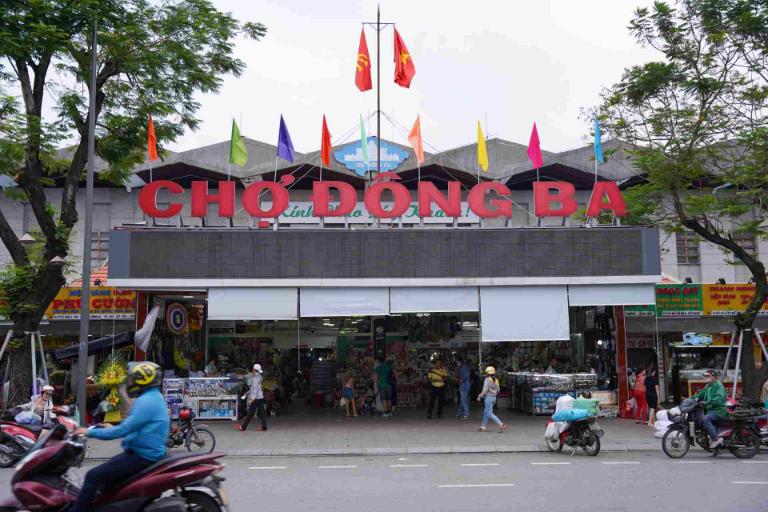
Dong Ba Market is a lively and sensory-rich place where you can get a taste of everyday life in Hue. Visitors can look at traditional handicrafts, fresh fruits and vegetables, and try famous local dishes like Bánh Khoai and Bánh Bèo, which capture the city’s flavors and rhythms.
A trip to Khai Dinh Tomb will help you learn more about the imperial soul of Hue. Khai Dinh Tomb is the perfect place to start an unforgettable journey through Hue’s history, beauty, and living heritage. It is close to royal tombs, spiritual sites, and cultural centers.
Related Posts:
- Thanh Toan Bridge Hue: History, Architecture
- Top Things to Do at Bach Ma National Park: Your Adventure Awaits
- An Dinh Palace: Explore the Beauty of Hue’s Imperial Landmark
- Markets in Hue: A Comprehensive Guide to Shopping in Hue







Be the first to comment!