

Cat Ba Island to Ha Giang: The Ultimate Traveler’s Guide
Traveling from Cat Ba Island to Ha Giang takes you from coastal scenery to the dramatic mountains of northern Vietnam. With several transport options available, understanding the best routes, travel time, and costs will help you plan a smooth and efficient journey. MOTOGO Tours is pleased to introduce this complete guide for your Cat Ba to Ha Giang adventure.
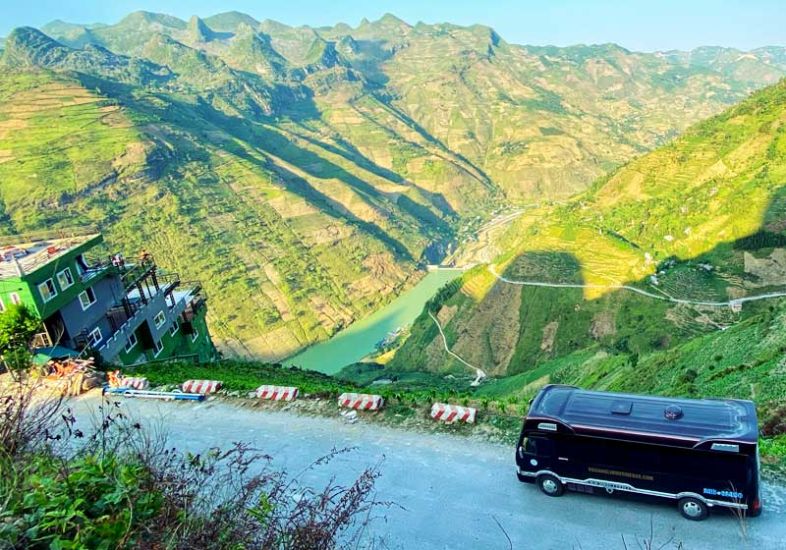
Overview of the Journey: Geography and Logistics
This journey spans a diverse geographical landscape and requires careful planning. Understanding the terrain, distances, and transport logistics will help you choose the most efficient and comfortable way to travel.
Bridging the 410km Gap: What the Distance Really Means
The distance from Cat Ba Town to Ha Giang City is about 410 kilometers (255 miles). While this may seem manageable on paper, Northern Vietnam’s terrain and traffic make the journey feel far longer than a simple highway drive.

Travelers must first align with ferry or speedboat schedules to reach the mainland, then navigate the busy industrial roads of Hai Phong and the crowded outskirts of Hanoi. The final 150 kilometers climb into dramatic limestone highlands, where winding mountain roads slow the pace but reward you with stunning scenery.
The Geographic Shift: From the Gulf of Tonkin to the Granite Peaks
Travelers love this route because of its constant transformation. You begin at sea level in the salty air of the Gulf of Tonkin, then gradually move north as the climate cools and the landscape shifts.
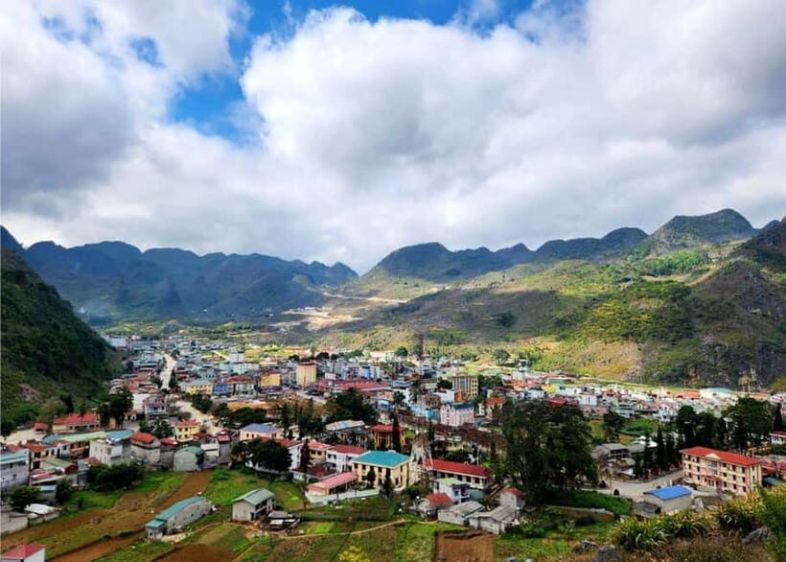
By the time you pass Tuyen Quang toward Ha Giang, flat rice paddies give way to towering mountains. The scenery evolves from turquoise coastlines to deep jungle greens, ending in the dramatic gray limestone karst of the highlands.
>>> Cao Bang to Ha Giang: Scenic Travel Guide
Transportation Options: Navigating the 480km Journey
There are no direct flights or trains between these two points. Your world for the next 10-12 hours will be defined by rubber on asphalt. Here are the primary ways to make the trip.
The Sleeper Bus Combo (The Backpacker Favorite)
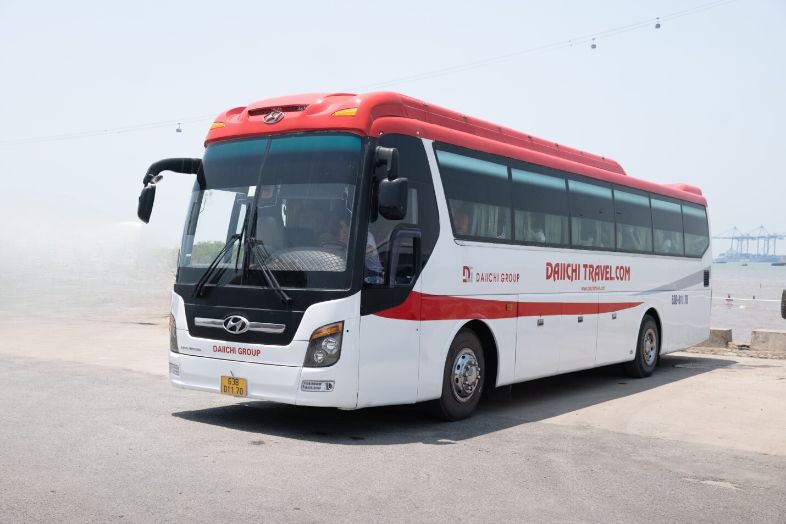
The “Combo Ticket” is the backbone of Vietnamese travel. When you book this, you aren’t just buying a seat; you’re buying a logistics manager. Several reputable companies like Daiichi Travel, Good Morning Cat Ba, and Cat Ba Express operate this route daily.
VIP “Palace Cabin” Experience:
- Fully reclining beds with privacy curtains, charging ports, reading lights, and sometimes TVs.
- Double cabins available for couples (~$49–$55 USD for two).
- Provides maximum comfort for the long Cat Ba Island to Ha Giang journey.
Standard Sleeper vs. Limousine Transition:
- Common two-stage journey: 35-seat bus from Cat Ba Town to Hanoi, then switch to a 9–12 seat limousine or heavy sleeper for the final 6 hours to Ha Giang.
- Short transit stop in Hanoi allows for a meal or leg stretch.
Detailed Logistics: The Ferry and Transfer Process: Traveling from Cat Ba Island requires a ferry crossing before hitting the mainland roads.
- Dong Bai Ferry Terminal:
- Most buses now use the new Dong Bai Ferry Terminal instead of the old Got Ferry.
- Bus drives ~40 minutes from Cat Ba Town to Cai Vieng Pier, then rolls onto the ferry.
- Ferry crossing takes 25–30 minutes; passengers can step out on deck to enjoy the sea breeze.
- Luggage Handling:
- Heavy bags stay in the bus belly; no need to carry them onto the ferry.
- Always bring essentials like passport, wallet, and electronics when leaving the bus.
- After reaching the mainland at Dong Bai, passengers reboard and continue toward the Hanoi-Hai Phong Expressway.
Private Car Transfers for Ultimate Comfort
For groups or those with a bigger budget, a private 7-seater SUV or 16-seater van offers the ultimate convenience, traveling directly from Cat Ba to Ha Giang. You skip waits in Hanoi and can stop for photos along the way. Costs range from $200–$320 USD, making it affordable when shared among five or six travelers.
Vehicle Types: Choosing the right vehicle can make the 9-hour journey from Cat Ba to Ha Giang much more comfortable. Here are the main options:
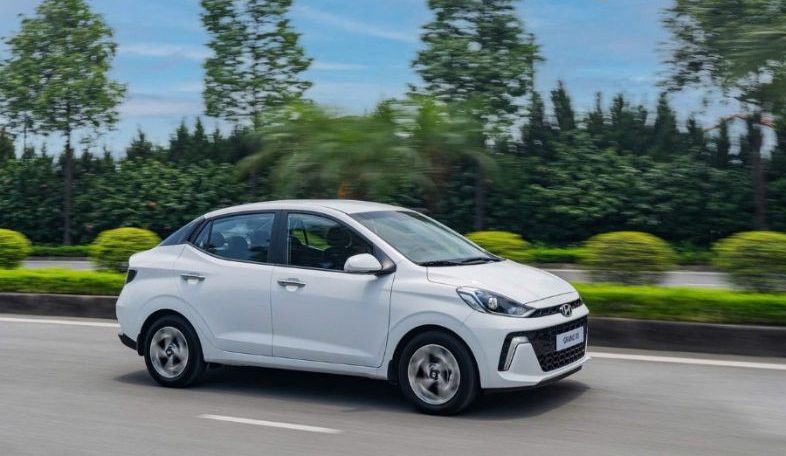
- 4-Seater Sedan: Ideal for couples or solo travelers, starting around $200–$215 USD (≈5.2 million VND).
- 7-Seater SUV: Preferred for Northern mountain roads due to better suspension and clearance, costing about $230–$250 USD (≈5.6 million VND).
- 16-Seater Minivan: Best for groups of 6 or more, offering ample luggage space and costing $300–$350 USD; split among 10 people, it can be cheaper than a VIP bus.
The “Two-Driver” Logistics and Ferry Coordination: Private transfers from Cat Ba to Ha Giang often involve a clever logistics trick to save time:
- Two-Driver System: One driver takes you from your hotel to Cai Vieng Pier. You board the ferry as a foot passenger.
- Pier Swap: A second driver and fresh vehicle meet you at Dong Bai Pier, avoiding long waits for large vehicles on the ferry.
- Tip: Always confirm with your provider whether it’s a “through-drive” or a “pier-swap” arrangement.
>>> Ha Giang Jeep Tour: Scenic Routes & Tips
Best Time to Make the Trip: Seasonal Insights
Timing your trip from Cat Ba to Ha Giang can greatly affect comfort and scenery. Understanding seasonal weather patterns helps you avoid heavy rains, enjoy clear mountain views, and make the long journey more enjoyable.
Autumn Gold: The “Yellow Season” and the Buckwheat Bloom
From mid-September to late October, the region enters the “Golden Season,” when the rice terraces on the mountainsides reach full maturity. Hoang Su Phi, slightly off the main Ha Giang Loop, offers the most dramatic views, with rice turning deep ochre and the air filled with the scent of toasted grain and woodsmoke as ethnic Dao and Nung communities begin harvesting.
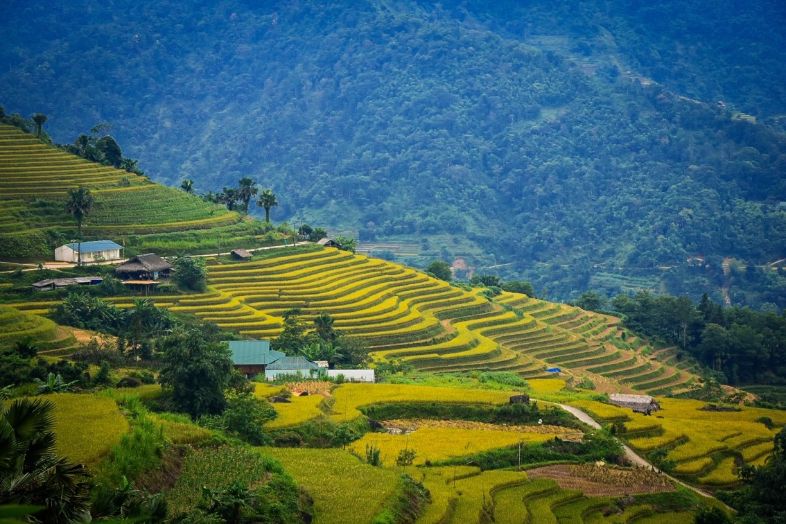
From late October into November, the Dong Van Karst Plateau is softened by pink and purple Buckwheat flowers, celebrated during the Buckwheat Flower Festival with traditional music, games, and lively markets. The weather is also ideal during this period, with clear skies and low humidity, offering perfect conditions for photography, especially at Ma Pi Leng Pass.
Spring Blossoms: The Rebirth of the Karst Plateau
Spring (late January to March) transforms the karst plateau into a scene of delicate beauty, coinciding with Tet Nguyen Dan celebrations. In towns like Sung La and Pho Bang, jagged limestone cliffs are softened by white plum blossoms and pale pink peach flowers, often blooming around traditional clay-walled homes like a living ink painting.
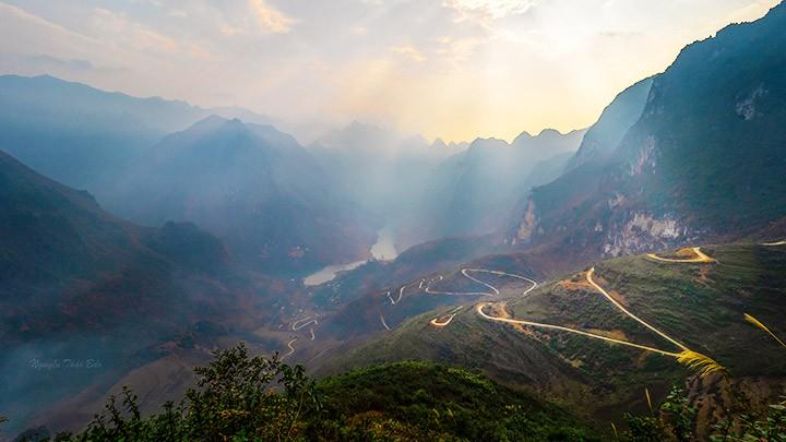
This season also brings vibrant local festivals, with Hmong and Tay people dressed in hand-woven indigo silks performing traditional dances and games. Early spring is ideal for “cloud hunting,” as cool valleys and sunlit peaks create a sea of clouds drifting through the mountains, offering breathtaking views.
Must-Visit Wonders When You Reach Ha Giang
Ha Giang is packed with breathtaking landscapes and cultural treasures waiting to be explored. From dramatic mountain passes to vibrant ethnic villages, knowing the must-visit spots helps you make the most of your northern adventure.
Ma Pi Leng Pass & Tu San Alley: The King of Cliffs
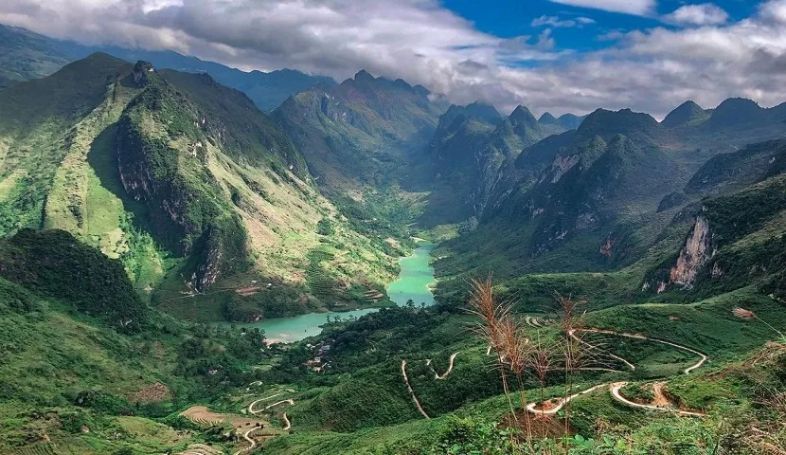
This is the holy grail of Vietnamese roads. Sitting at 1,500m, the Ma Pi Leng Pass offers a dizzying view of the emerald Nho Que River snaking through Tu San Alley. Don’t just look from above; take the steep path down to the water for a boat trip to truly feel the scale of the cliffs.
>>> Ha Giang Loop Map: Your Ultimate Guide to Adventure
Lung Cu Flag Tower: Standing at the Northern Edge
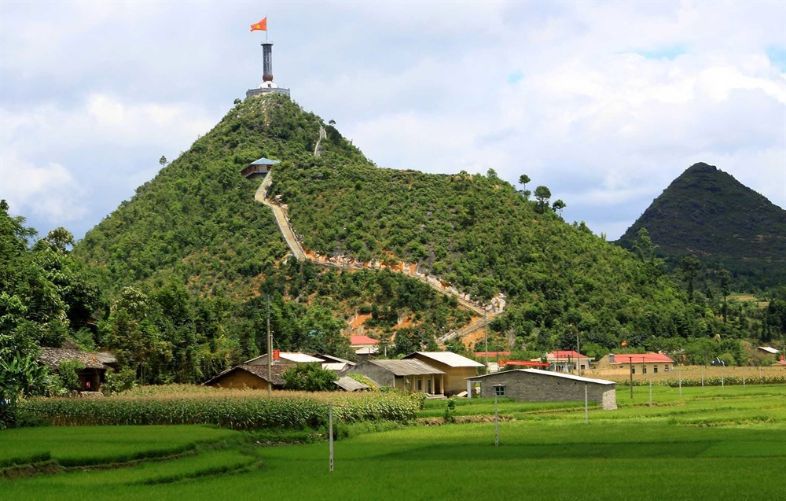
Climb the nearly 300 steps to the top of the Lung Cu Flag Tower. Here, a massive Vietnamese flag flies high above Dragon Mountain. From the summit, you can look directly into the mountains of China, marking the symbolic northernmost point of your journey.
Dong Van Ancient Town: Where History Meets Coffee
Nestled in a valley surrounded by limestone peaks, Dong Van Ancient Town is a charming area filled with century-old houses featuring clay walls and traditional yin-yang tiled roofs. The architecture reflects the region’s rich history and offers a glimpse into life in Northern Vietnam over generations.
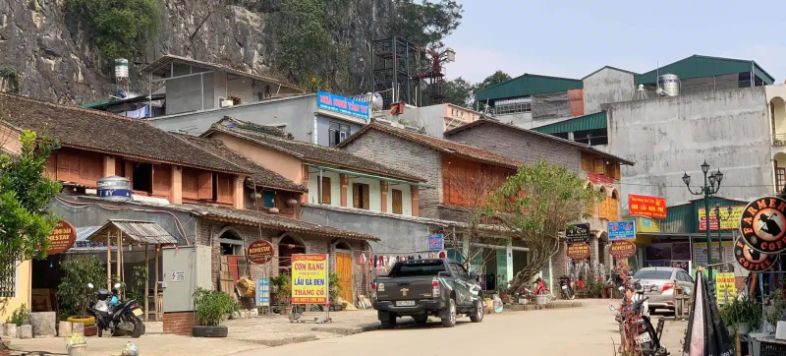
On Sunday mornings, the town comes alive as ethnic minorities from across the province gather for the weekly market. The streets burst with vibrant colors, traditional clothing, and the lively sounds of trading, creating an unforgettable cultural experience for visitors.
Du Gia Village: The Hidden Oasis of Waterfalls
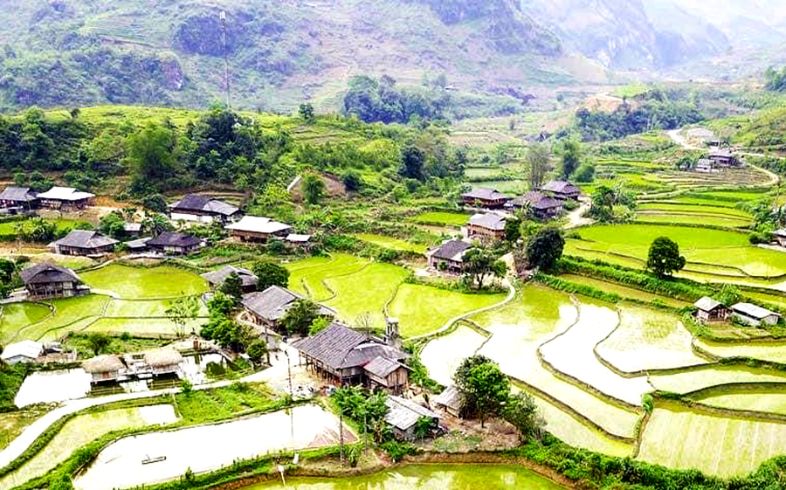
For a quieter alternative to the main tourist routes, visit Du Gia, a serene village home to Tay and Hmong communities, surrounded by lush rice fields. The highlight is Du Gia Waterfall, where crystal-clear waters form a natural swimming hole—perfect for cliff jumping and cooling off after a day of riding through the mountains.
Essential Packing List & Safety Tips
Preparing well can make your Cat Ba to Ha Giang journey safer and more enjoyable. Knowing what to pack and how to stay safe ensures you’re ready for long drives, mountain roads, and changing weather conditions.
The Capsule Wardrobe: Layering for 0°C to 30°C
Unlike the stable tropical heat of Cat Ba, Ha Giang temperatures can swing 20 degrees in a single day.
- Base Layers: Pack 2-3 moisture-wicking synthetic shirts. Avoid cotton; it stays damp and cold.
- Thermal Protection: Even in summer, high passes like Ma Pi Leng can be freezing. Bring a lightweight down jacket that compresses into a small ball.
- The “Ride-Ready” Shell: A high-quality windbreaker or waterproof jacket is non-negotiable.
- Footwear: Leave the flip-flops for the homestay showers. You need sturdy sneakers or trekking boots with high-traction soles for the gravelly roads and steep canyon hikes.

>>> Let’s see more: Tips for Solo Travelers and Group Tours on Alternative Routes in Ha Giang
Safety & Logistics: Survival Tips for the Loop
- The 5 PM Rule: Aim to be at your homestay by 5:00 PM. Fog settles in quickly, and mountain roads have zero streetlights.
- Honk at the Blind: In Ha Giang, your horn is your voice. Give a quick tap before every sharp, blind corner to alert oncoming trucks.
- Watch for “Happy Water”: At dinner, you will be offered local corn wine. It’s powerful. If you are riding the next day, keep it to a symbolic sip.
- Cash Tiers: Break your money into small notes (10k, 20k, 50k). Many village stalls cannot break a 500,000 VND bill.
- The ATM Gap: Ha Giang City and Dong Van are your last reliable ATM stops. For a 4-day loop, carry at least 3 to 4 million VND in cash for fuel, food, and homestays.
- SIM Strategy: Viettel is the only provider with consistent coverage in the “deep” valleys of the north.

The trek from Cat Ba Island to Ha Giang is the ultimate Vietnamese adventure. It requires stamina and smart preparation, but the reward is a landscape that looks like it was painted by the gods. From the limestone caves of the coast to the karst plateaus of the north, you’re seeing the very soul of Vietnam.
Related Posts:
- Must-Visit Destinations in Ha Giang: A Comprehensive Travel Guide
- Discover the Best Waterfalls in Ha Giang, Vietnam
- Villages in Ha Giang: Explore the Hidden Gems of Northern Vietnam
- Ha Giang Loop’s Best Passes and Roads: A Complete Guide to Vietnam’s Top Motorbike Routes
- Ha Giang’s Culinary Specialties: Top 17 Famous Dishes From This Renowned Northern Land







Be the first to comment!