

Mua Caves Ninh Binh: A Must-Visit Natural Wonder in Vietnam
Mua Caves in Ninh Binh is one of Vietnam’s most stunning natural wonders and a must-visit destination for travelers seeking panoramic views and unforgettable outdoor experiences. Let MOTOGO Tours explore and discover the reasons local and international visitors love this hidden gem.
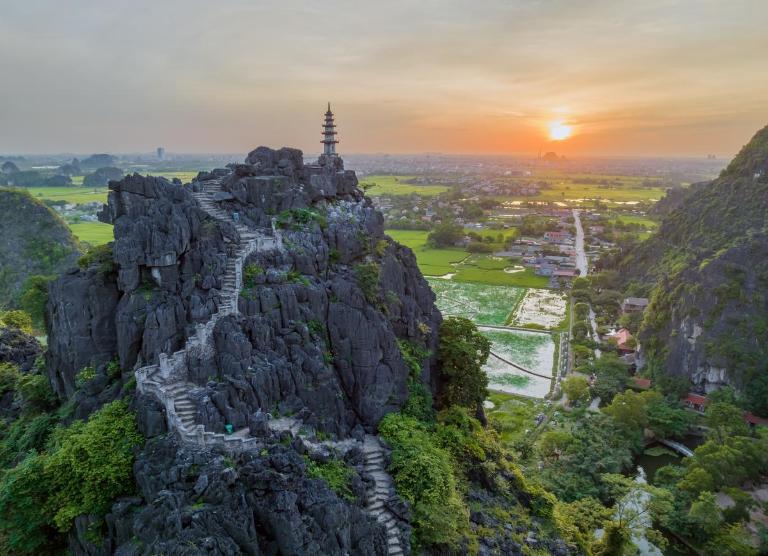
Mua Caves Overview
Mua Caves sits at the heart of Ninh Binh’s breathtaking limestone landscapes. Therefore, it offers one of the most rewarding viewpoints in Vietnam. The ascent is short, but memorable. It is an active, immersive experience that blends a physical challenge with a spectacular payoff.
The Geographical Anchor: Where Exactly is Mua Cave?
Mua Cave is located in the heart of Ninh Binh Province, about 90 km (56 miles) south of Hanoi. Its strategic position places it between Ninh Binh’s two most iconic landscapes: the lush rice fields and karst formations of Tam Coc–Bich Dong to the south, and the UNESCO-listed Trang An Landscape Complex to the north and west.
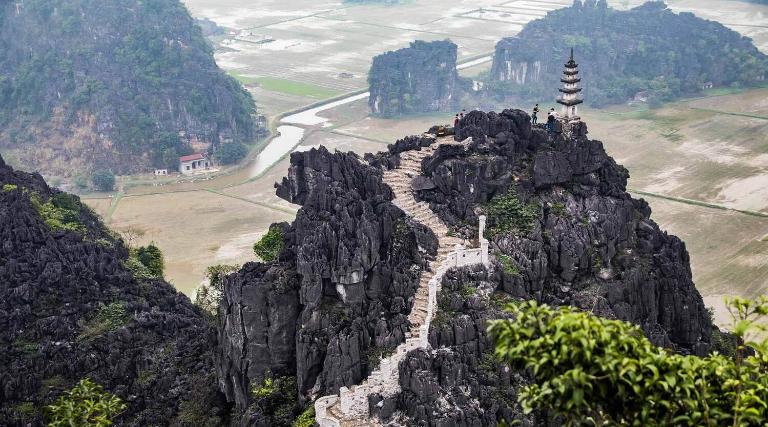
This prime location allows Mua Cave set atop Ngoa Long Mountain to offer sweeping views that capture the essence of both regions at once. Rising sharply from the flat river plains and just a short 10–15 minute motorbike ride from Tam Coc, it stands as one of Ninh Binh’s most accessible and visually striking natural landmarks.
Unveiling the Mystery: The Legend Behind the Name Mua Caves
The Vietnamese name Mua Caves translates to “Dancing Cave,” a poetic title rooted in an ancient royal legend. According to local lore, King Tran Thai Tong of the Tran Dynasty often retreated to this quiet area near Hoa Lu to escape the burdens of ruling. At the base of Ngoa Long Mountain, he used the small, cool cave as his private theatre, where his concubines performed graceful dances for him.
Because of these royal performances, the cave was forever associated with dance, giving rise to its lasting name. Today, while visitors come mainly for the panoramic mountain views, the legend adds a romantic layer of history—reminding travelers that this dramatic viewpoint once served as a king’s intimate sanctuary of art and leisure.
A Pillar of History: Mua Cave’s Place in Vietnam’s Past
Mua Cave sits within one of Vietnam’s most historically significant regions. Just nearby is Hoa Lu, the ancient capital of Vietnam during the Dinh and Early Le Dynasties, where Ninh Binh’s towering limestone karsts served as natural fortress walls. These dramatic formations later continued to provide strategic defense for the Tran Dynasty, helping protect the kingdom—especially during Mongol invasions.
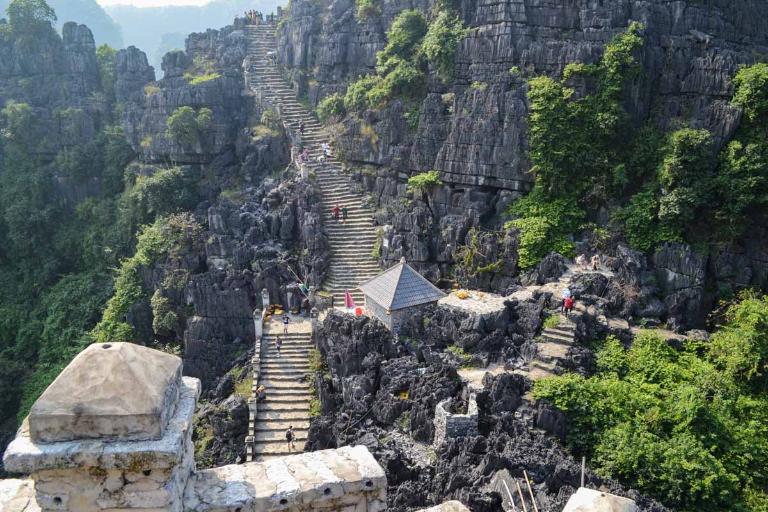
In modern times, the area was thoughtfully developed to highlight its natural beauty and historical significance. The iconic 500-step staircase, dragon statues, and stone railings were added to enhance accessibility and evoke Vietnam’s royal heritage. These updates helped transform Mua Cave from a former strategic refuge into one of the nation’s most iconic scenic viewpoints.
The Panoramic Reward: What Makes This Ninh Binh Icon Unmissable
The summit of Mua Caves offers Ninh Binh’s most iconic viewpoint, where towering limestone karsts, winding rivers, and vibrant rice fields come together in a perfect blend of natural beauty and human tradition. It’s the defining panorama of Vietnam’s “Inland Ha Long Bay” and a reward that makes every step of the climb worthwhile.
The Majestic River and Rice Paddy Tapestry: Witnessing Tam Coc from Above
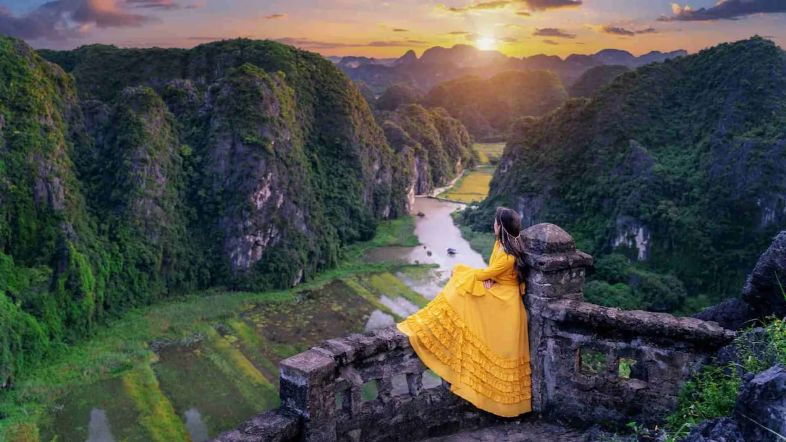
From the summit of Mua Caves, the Ngo Dong River winds through Tam Coc like a silver ribbon laid across a vast green or golden patchwork of rice fields. You can even trace the exact route of the small sampan boats as they glide in and out of the caves below.
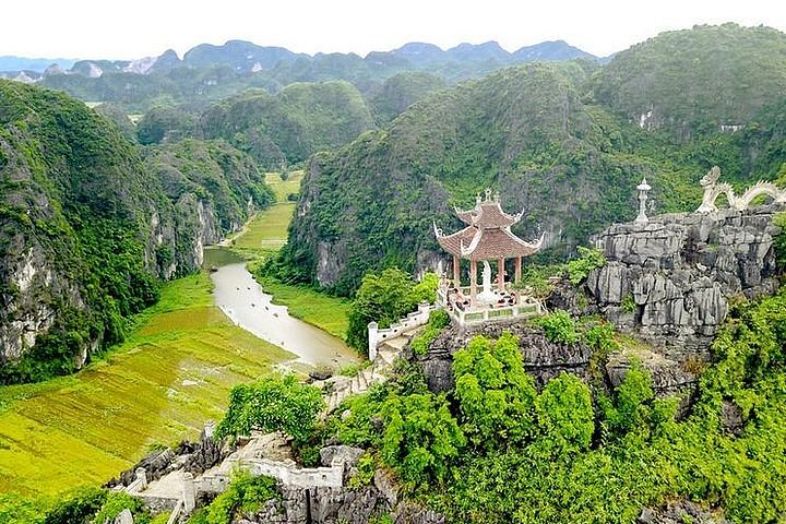
From this height, the boats look miniature and the rice paddies form a neatly divided quilt, revealing both the beauty and the agricultural importance of the region. It’s the one viewpoint that captures the true scale and harmony of Tam Coc’s landscape.
The Magic of the Golden Harvest Season
Mua Caves is beautiful year-round, but its most iconic moment comes during the Golden Harvest Season, when the Tam Coc rice fields turn a brilliant yellow. The first harvest (late May–mid June) is the most dramatic, while the second (late September–mid October) offers the same golden views with cooler, clearer weather.
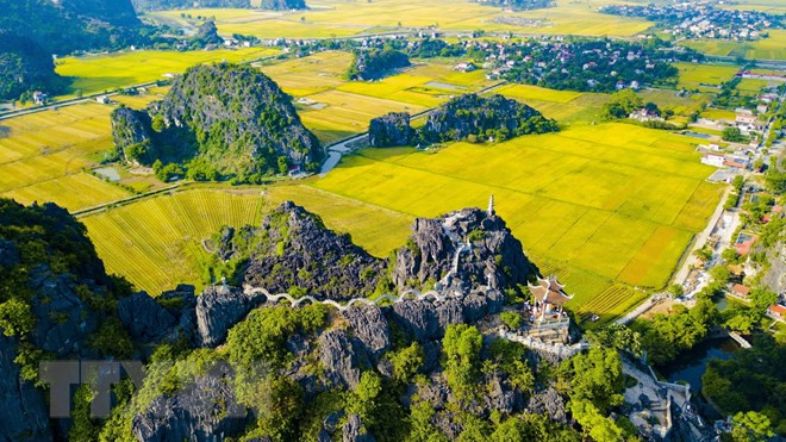
In spring, the fields glow a vibrant green, and in winter they may be flooded, creating mirror-like reflections. But for that classic postcard shot, nothing beats visiting during the golden season.
>>> Exploring Tam Coc Ninh Binh: The Scenic Beauty of The Region’s Iconic Landscape
The Stairway to Heaven: Conquering the 500 Steps
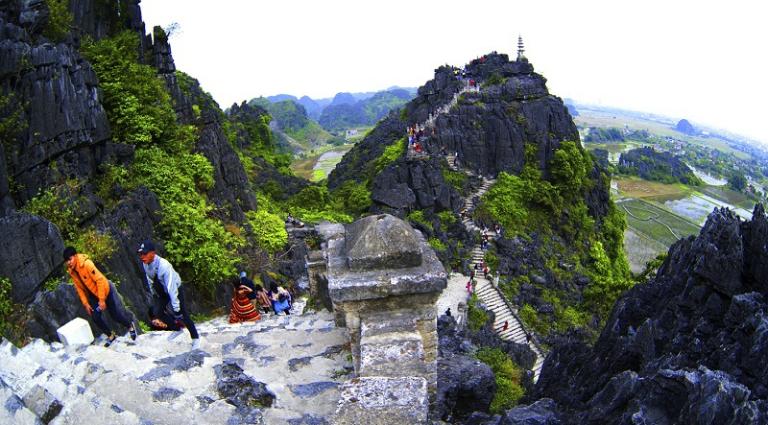
The 500-step “Stairway to Heaven” is the defining challenge of Mua Caves, carved into the side of Ngoa Long Mountain and rising 142 meters to two stunning peaks. The steep, uneven stone steps twist up the limestone, offering new angles and photo spots along the way.
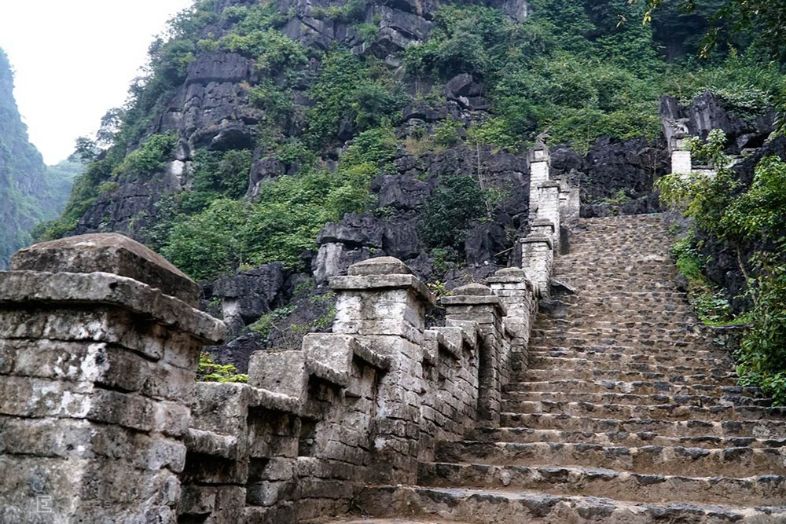
The climb takes about 25–45 minutes, depending on pace and heat. Take it slow and enjoy the ascent—the rewarding panorama at the top makes every step worth it.
Lying Dragon Peak: The Iconic Photo Opportunity
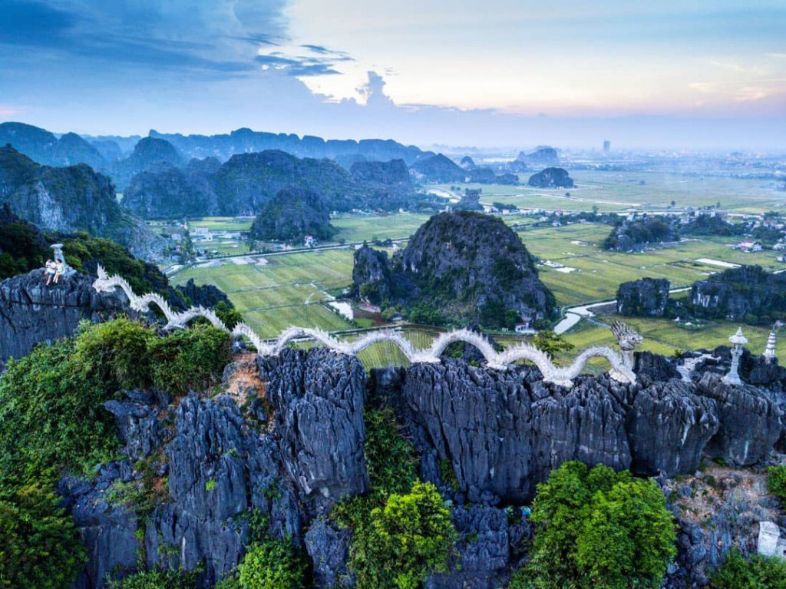
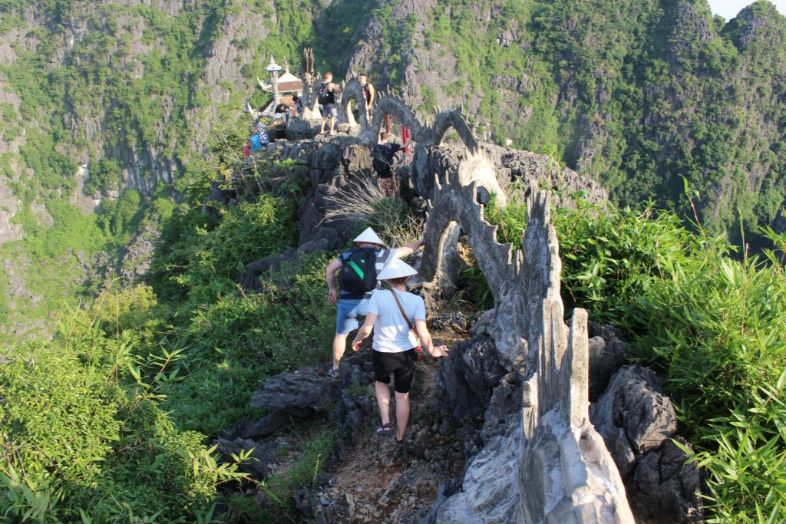
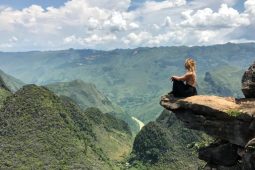
Lying Dragon Peak, the highest point of Mua Caves, is crowned by a striking stone dragon—a symbol of power and good fortune in Vietnam. It’s the spot most travelers recognize from photos, perched on jagged rocks with the sweeping Tam Coc valley below.
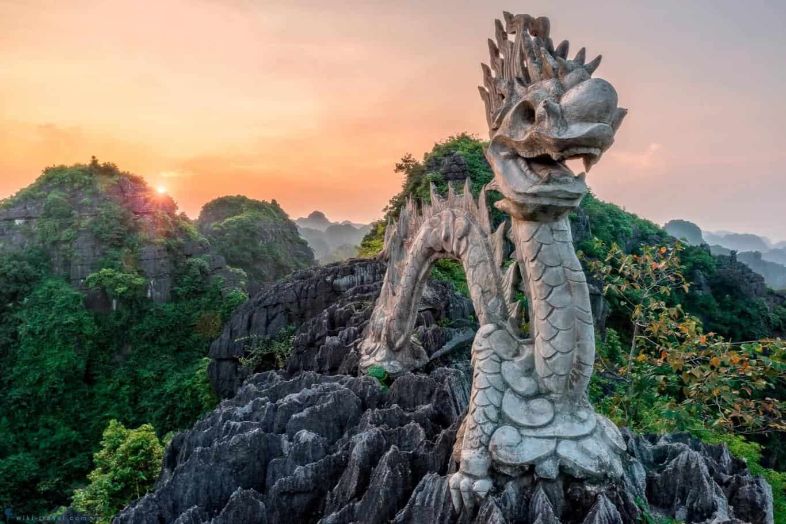
Climbing near the dragon requires caution, but the view is unbeatable. From here, you can take in the river, rice fields, and surrounding peaks, making it the ultimate location for panoramic, unforgettable photos.
The White Stone Pagoda: A Place of Serenity and Perspective
The eastern peak of Mua Caves is topped by the charming White Stone Pagoda, a small stone tower that offers a serene contrast to the dramatic Dragon Peak. This slightly less crowded path provides a peaceful spot to enjoy the views and reflect on the surrounding beauty.
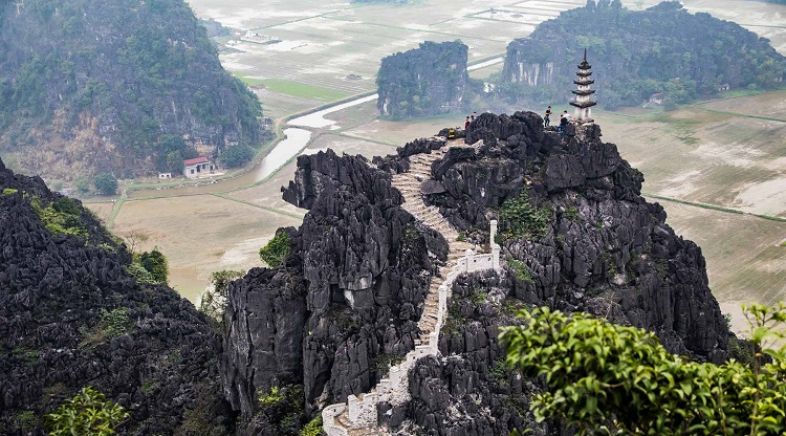
From this peak, you get a unique perspective of Dragon Peak framed against the sweeping karst landscape, with endless rice paddies stretching below. For a complete Mua Caves experience, visiting both peaks offers the perfect balance of grandeur and tranquility.
Beyond the Summit: Exploring the Base and the True ‘Cave’
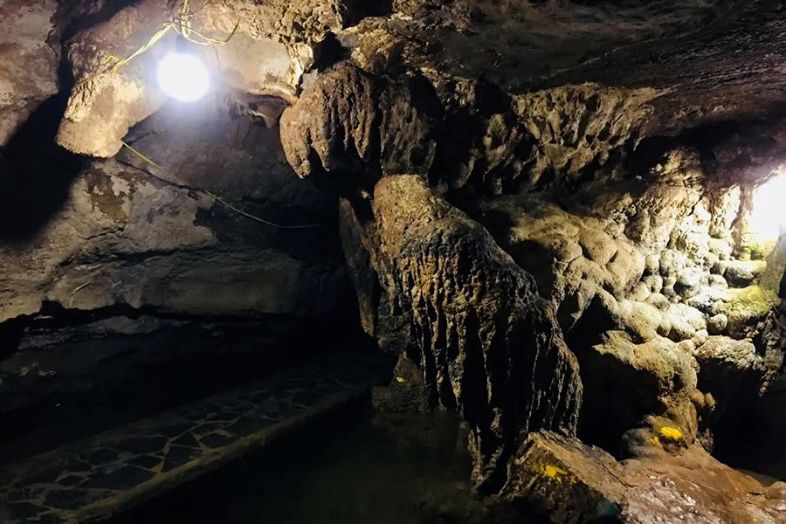
While most visitors focus on the summit, Mua Caves is more than just the staircase. The base area is a beautifully maintained ecological space with photo-worthy spots and the modest Mua Caves itself—a cool, shaded cavern where King Trần Thái Tông’s private performances once took place. A quick visit connects you to the site’s history and legend.
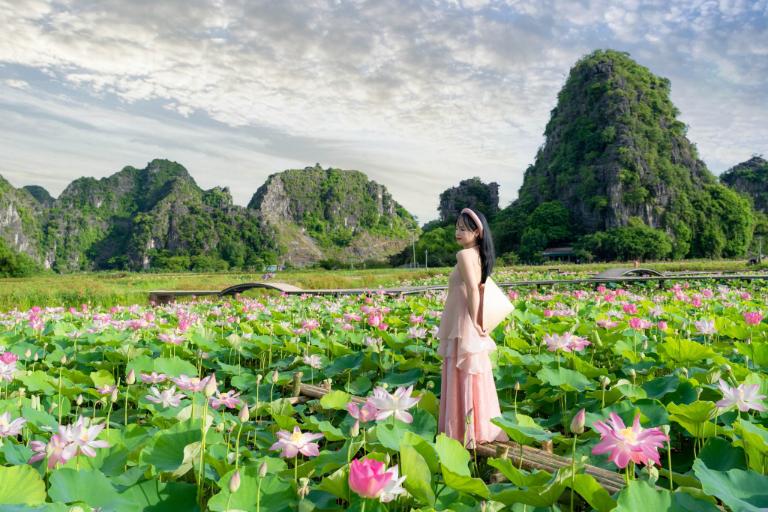
The base also features a tranquil Lotus Pond, at its peak bloom from May to July, with wooden walkways perfect for photos and relaxation. Taking time to explore the base adds depth to your visit, offering a serene contrast to the challenging climb above.
Unforgettable Things to Do When You Travel to Mua Caves Ninh Binh
Visiting Mua Caves is more than just climbing 500 steps—it’s a complete experience blending adventure, culture, and natural beauty. To truly capture the magic of this iconic Ninh Binh destination, take your time and explore everything the site has to offer.
Conquer The Peaks: The Essential Mua Caves Challenge
To fully experience Mua Caves, time your climb for sunrise or sunset. Morning ascents offer cool air, empty steps, and mist weaving through the karsts, while sunset paints the valley in golden light, perfect for photography. Avoid midday heat and capture the landscape at its most dramatic.
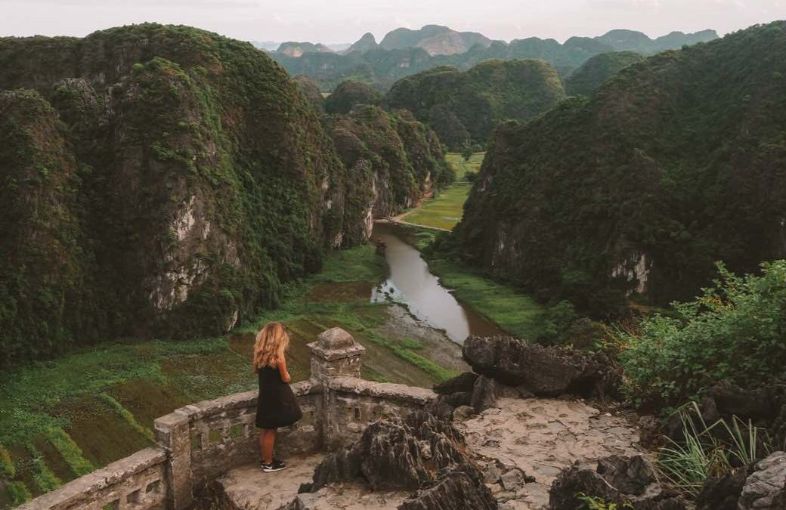
Be sure to visit both peaks: Lying Dragon Peak for sweeping 360-degree panoramas beside the stone dragon, and White Stone Pagoda for a quieter, framed view of the Dragon Peak. If your visit coincides with the golden rice harvest, the summit provides breathtaking views of the vibrant fields below, with tiny sampan boats tracing the Ngo Dong River, completing the iconic Ninh Binh experience.
Explore The Base: Culture, Nature, And Tranquility
The base of Mua Caves is more than a ticketing area—it’s a serene space full of cultural and natural highlights. Stroll along the wooden walkways across the Lotus Pond, especially between May and July when the pink and white blooms contrast beautifully with the karsts, offering a peaceful spot to rest after the climb.
Don’t miss the actual Mua Cave near the entrance, a cool, shadowy link to the legend of King Tran Thai Tong. The base also provides excellent photo opportunities with Ngoa Long Mountain as a dramatic backdrop, framed by small pagodas, stone bridges, and landscaped features, making it perfect for capturing the essence of Mua Caves.
>>> Trang An Landscape Complex: Discover Vietnam’s Breathtaking UNESCO Site
Cycle Through The Rice Paddies
The roads around Mua Caves wind gently through the rice paddies, offering a serene escape after the climb. Renting a bicycle often inexpensive or included by local accommodations lets you explore the area at a leisurely pace.

As you ride, you’ll encounter water buffalo, local farmers, and traditional village houses, providing an authentic glimpse of rural Vietnamese life and a peaceful contrast to the dramatic views from the summit.
Pair The Climb With A Boat Tour
To fully appreciate Ninh Binh, combine the vertical perspective from Mua Caves with a horizontal boat tour. The climb offers sweeping views and the big picture, while a boat ride lets you glide through rivers, under caves, and up close to the rice fields.

Most visitors pair Mua Caves with the Tam Coc boat tour for its iconic paddies or the longer Trang An tour for caves and temples. Experiencing both provides a complete, immersive view of the region’s natural and cultural beauty.
Indulge in Local Ninh Binh Cuisine
After conquering the 500 steps, reward yourself with Ninh Binh’s famous local dishes. The region’s signature mountain goat meat is lean, flavorful, and often served stir-fried with lemongrass and chili or in a hotpot.

Don’t miss burned-rice, the crispy rice crust topped with savory dried meat or shrimp floss—a perfect snack to refuel after your climb. These specialties are easily found in restaurants near Mua Caves and Tam Coc.
>>> Must-Try Dishes in Ninh Binh: A Foodie’s Guide
Capture Unforgettable Moments: Your Mua Cave Photography Masterclass
Mua Caves is a photographer’s paradise, offering both dramatic heights and serene landscapes. At Lying Dragon Peak, frame yourself beside the stone dragon with the sweeping valley, Ngo Dong River, and golden rice fields below. Sunrise or sunset provides the perfect light to capture the misty or warm, dramatic atmosphere.
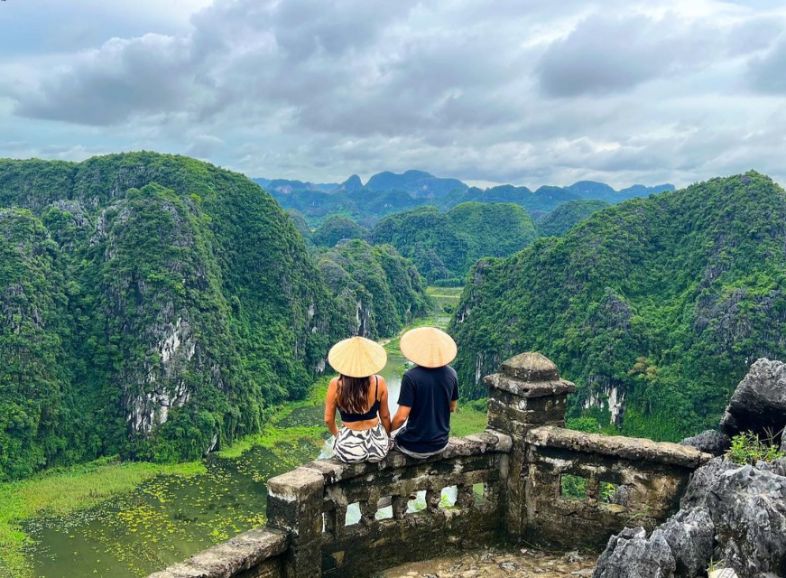
Don’t forget the climb itself, the “Stairway to Heaven” offers leading lines and intricate railings for striking shots and the base, where the Lotus Pond reflects Ngoa Long Mountain. Combining these perspectives lets you create a complete visual story of Mua Caves, from its rugged peaks to its tranquil, reflective spaces.
>>> Let’s see more: Ninh Binh Photography Tour: Capture Vietnam’s Natural Beauty
Strategic Travel Planning: Mastering Your Trip to Ninh Binh
A trip to Mua Caves Ninh Binh benefits from careful planning. Beyond visiting during the golden rice season, knowing how to get to Ninh Binh and navigate the local area can make the difference between a good trip and a great one.
How to Get to Mua Caves: Transportation Breakdown
- From Hanoi to Ninh Binh: Take a bus or limousine van (2–3 hours) for an efficient, cost-effective trip, or enjoy a scenic 2.5–3 hour train ride on the Reunification Express.
- From Ninh Binh to Mua Caves: The site is 5–10 km from the city or Tam Coc. Rent a motorbike for flexibility, ride a bicycle for a leisurely eco-friendly journey, or take a taxi/Grab for convenient door-to-door service.

The Best Time to Visit Mua Caves Ninh Binh
Choosing the best time to visit Mua Caves isn’t just about weather, it’s about catching the landscape at its peak, especially during the rice harvest. While the karst mountains are stunning year-round, two periods make the experience truly unforgettable.
- The Golden Window – Chasing the Rice Harvest: For the iconic golden panorama, visit during the two main harvest seasons. Late May to mid-June offers the peak golden fields with vivid contrast against the karsts and sky. Late September to mid-October provides similar golden hues with cooler, drier weather and clearer skies for a more comfortable climb.
- The Sweet Spot – Weather and Comfort: For pleasant climbing conditions and fewer crowds, visit in spring (March–early May), when the rice is a vibrant green and temperatures are mild, or in autumn (late October–November), when the weather is cool, dry, and clear, offering crisp views from the summit.
- Periods to approach with caution: Summer (June–August): Hot and humid, requiring sunrise or sunset climbs to avoid dehydration. The views are still beautiful but the ascent is tougher. Winter (December–February): Rice fields are flooded or barren, and the weather can be cloudy or misty. It’s peaceful and less crowded, but the vibrant colors of the Golden or Green Seasons are absent.
Practical Tips for Visiting Mua Caves Ninh Binh
You’re ready to tackle the 500 steps to Mua Caves, but a successful visit requires planning. With the right timing, packing, and practical tips, you can stay comfortable and safe while making the most of this stunning location—ensuring your climb is as unforgettable as the view itself.
Mastering the Ascent: Gear and Hydration Essentials
For the 500-step climb, proper preparation is key. Wear sturdy, grippy sneakers to handle steep, uneven stone steps, and bring 1.5 liters of water per person to stay hydrated.
Dress in light, breathable clothing, and don’t forget a hat and sunglasses for sun protection. A small daypack keeps your hands free and makes the climb safer and more comfortable.
Timing is Everything: Optimizing Your Visit
Climb during the golden hours – sunrise (around 5:45 AM) or sunset (4:30–5:00 PM) to avoid the heat and capture the best light. Plan your visit around the late May to mid-June rice harvest for the iconic golden fields.
Take strategic breaks along the staircase at benches or viewing platforms to hydrate, rest, and enjoy partial views, making the climb more comfortable and the final panorama even more rewarding.
>>> Safety Tips for Traveling in Ninh Binh: Essential Guide for Tourists
Practical Logistics and Safety Tips
Managing the minor details ensures a smooth, worry-free trip.
- Cash is king: Carry enough cash for the 100,000 VND entrance fee per person, parking fees (around 10,000–15,000 VND for a motorbike), and any water or snacks you plan to buy at the base.
- Be Extremely Cautious on the Dragon Peak: here are no safety railings on this final, rocky ridge. If you are afraid of heights, or if the rocks are wet, stay back! You can get 95% of the same incredible view and photo from the safer, wider platform just below the actual dragon.
- Combine and Conquer: Schedule your Mua Caves climb (the active part) with a relaxing Tam Coc or Trang An boat tour (the passive part) on the same day. This synergy gives you a complete, balanced perspective of the Ninh Binh landscape
- Utilize the Base Area: Plan to spend 30 minutes at the base to explore the beautiful Lotus Pond (especially during bloom season), visit the actual historical Mua Caves, and capture some photos with the majestic mountain as the backdrop.
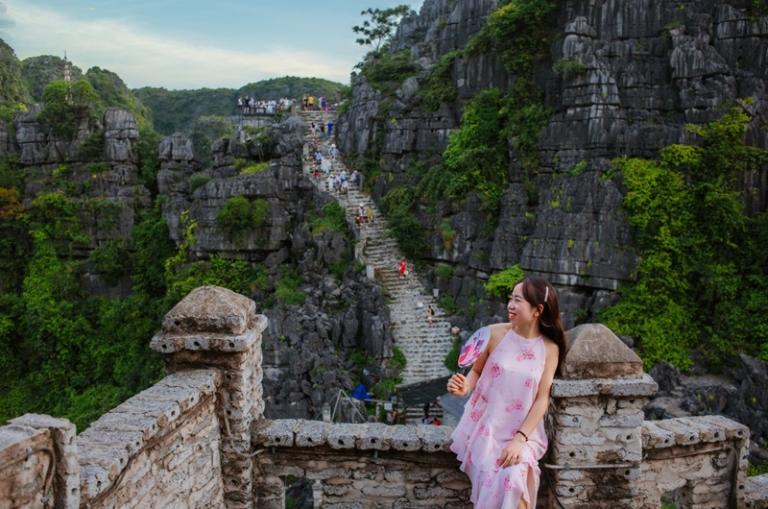
Mua Caves Ninh Binh presents all: natural beauty, adventure, history, and culture. This location is really amazing from the breathtaking vistas atop the limestone peaks to the peaceful tranquilly of Tam Coc. Mua Caves is an adventure you won’t soon forget whether your hike to the top of the mountain, cruise down the Ngo Dong River, or just enjoy the amazing vistas.
Related Posts:
- Ninh Binh Travel: A Complete Guide to Explore Vietnam’s Hidden Gem
- Must-Visit Destinations in Ninh Binh: Natural Wonders and Cultural Gems
- Explore Cuc Phuong National Park: Vietnam’s First National Park
- Trang An Ecotourism Area: Exploring Vietnam’s Natural & Cultural Beauty



Be the first to comment!